
Magento to Shopify Plus: 5 Migration Secrets Agencies Hide
By:
Scaling With Shopify Plus: a practical Shopify Plus guide to the SEO, CRO, and revenue decisions that matter for ecommerce teams.
Mid-market retail brands lose millions in organic traffic and revenue because legacy Magento agencies artificially inflate replatforming complexity while mismanaging database schema migrations. In our work with merchants, we have found that successful replatforming depends on bypassing agency-inflated middleware estimates and executing a strict URL redirect strategy to preserve organic search equity. This blueprint outlines the exact technical audit steps and database mapping frameworks required to execute a risk-free transition.
Key Takeaways
- The 2000-Variant Limit: Map Magento simple products to Shopify variants using the parent-variant model, respecting Shopify's native 2,000-variant limit per product.
- The 1:1 Redirect Protocol: Prevent organic traffic loss by mapping every legacy Magento URL directly to its Shopify equivalent using a 301 redirect map instead of wildcard rules.
- The Dual-Retainer Ramp-Down: Negotiate a 50% reduction in Magento support hours once the Shopify build enters staging to avoid double-billing.
- Native Feature Substitution: Replace custom Magento PHP modules with Shopify Markets, Checkout Extensibility, and Metaobjects to lower total cost of ownership in 2026.
Why Your Magento Web Development Agency Is Inflating Your Replatforming Estimate
A Shopify Plus migration consultant is an independent technical specialist who audits legacy database schemas, validates data pipelines, and restructures monolithic architectures into native Shopify features to prevent agency retainer inflation, preserve organic search rankings, and ensure seamless platform transitions.
Legacy Magento agencies often protect their monthly retainers by overcomplicating the migration process. They present bloated discovery estimates, claiming your custom business logic requires hundreds of hours of custom middleware development.
To spot inflated estimates, audit your agency's proposal for these specific red flags:
- Quotes for custom middleware to sync basic inventory when native Shopify APIs handle it out of the box.
- Estimates exceeding 150 hours for catalog configuration that can be solved via Shopify's native custom data structures.
- Claims that B2B pricing tiers require a completely custom headless build rather than Shopify Plus B2B features.
Instead of paying for redundant custom middleware, leverage enterprise-grade custom Shopify development to build lightweight, native integrations that keep your total cost of ownership low.
The Database Mapping Checklist: 5 Shortcuts That Destroy SEO Traffic
When agencies rush database mapping, your organic search rankings suffer. Avoid catastrophic traffic drops by enforcing this strict data migration checklist.
- Map Magento Simple Products to Shopify Variants: Magento structures simple products as separate entities under a configurable product. Shopify uses a parent-variant model with a limit of 2000 variants per product. Group these correctly to avoid broken product pages.
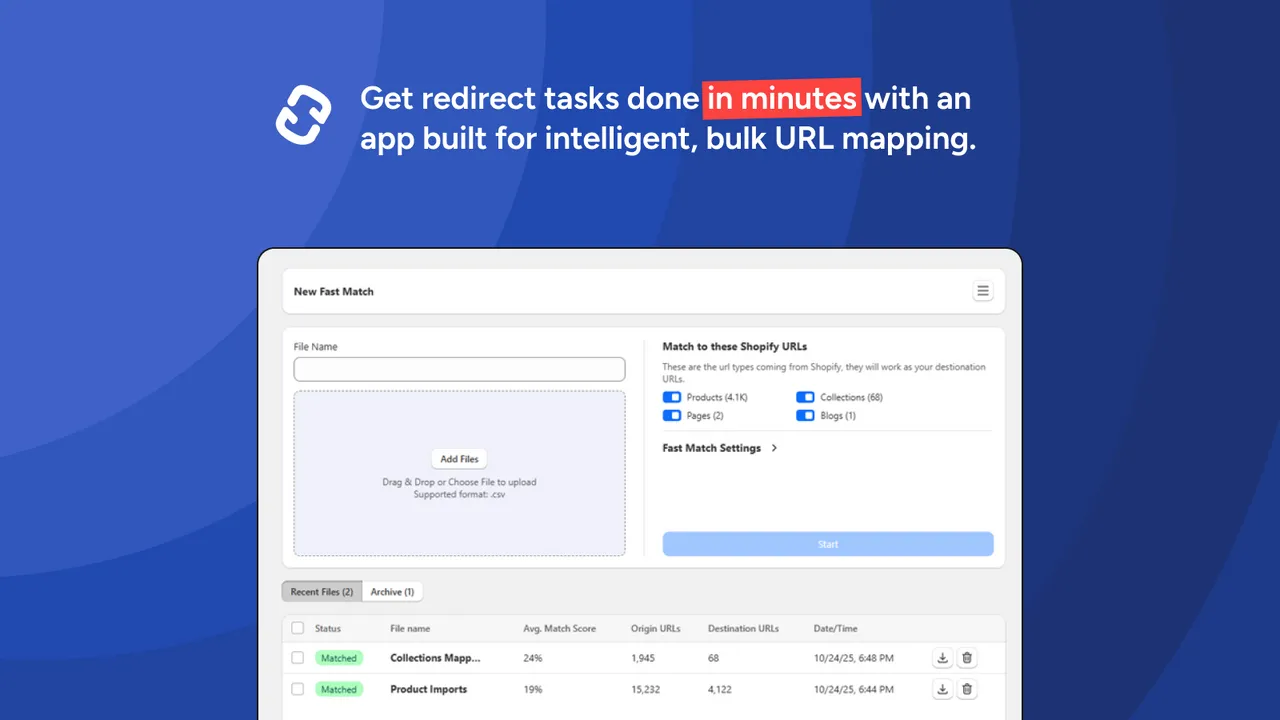
- Preserve URL Handles and Implement 1:1 Redirects: Never rely on bulk directory-level redirects. Every old Magento URL must map directly to its new Shopify equivalent using a 301 redirect map.
- Migrate Metafields and Custom Attributes: Ensure product attributes like material, size, and custom specifications are mapped to Shopify Metafields to maintain faceted collection filtering.
- Retain Image Alt Text and File Names: Do not let migrations rename product images. Retaining original image file names and alt tags preserves your rankings in Google Image Search.
- Validate Canonical Tag Structures: Ensure your collection pages do not generate duplicate canonical tags for filtered product listings, which triggers search engine indexing penalties.
What to Avoid
Do not allow your agency to delete old product URLs that are out of stock. Deleting these pages instead of redirecting them to the closest parent category causes immediate 404 errors and destroys your domain authority.
How to Fix
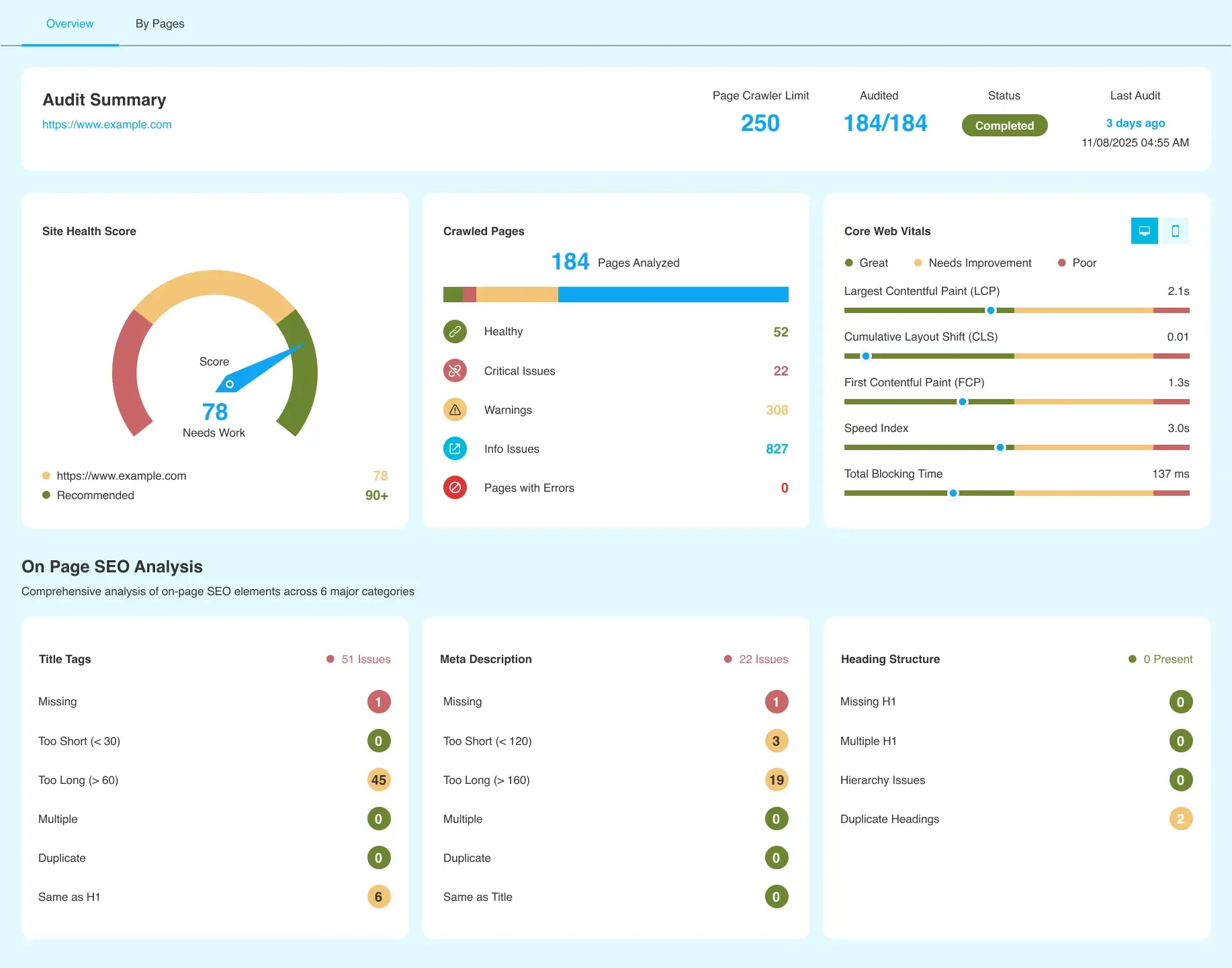
Run a full crawl of your Magento site using Screaming Frog prior to launch. Compare this list against your Shopify URL redirect table to ensure 100% coverage of all legacy URLs. For specialized organic search preservation, consult structured technical SEO & GEO programs before pointing your DNS.
Scaling with Shopify Plus in 2026: Replacing Magento Custom Code with Native Features
Magento's monolithic architecture relies heavily on custom PHP modules that require constant security patching. Scaling with Shopify Plus in 2026 replaces this bloated codebase with secure, native features and a vetted app ecosystem.
Identify which custom Magento features can be migrated directly to native Shopify equivalents:
- Replace complex multi-store setups with Shopify Markets to manage international pricing, localization, and currencies from a single admin panel.
- Transition legacy custom checkout code to Shopify Checkout Extensibility to ensure secure, fast checkouts without breaking upgrade paths.
- Convert custom database tables into Shopify Metaobjects to store and display complex relational data like store locators or size charts.
We recommend comparing the platform architectures directly to understand the operational shift:
Magento Feature Shopify Plus Native Equivalent Technical Advantage Multi-Store Views Shopify Markets Single-admin localization & pricing Custom PHP Checkout Checkout Extensibility Secure, upgrade-safe customization Custom DB Tables Shopify Metaobjects Relational data without custom SQLIf your business logic requires highly specialized functionality, use our e-commerce app and integration development services to build private apps rather than installing heavy, unvetted third-party public apps that slow down your site speed.
The Dual-Retainer Trap: How to Transition Contracts Without Double-Paying
Many brands fall into the trap of paying their legacy agency for Magento maintenance while simultaneously paying a new agency for the Shopify Plus build. This double-billing can drain your migration budget before launch.
To avoid the dual-retainer trap, our team implements the Dual-Retainer Ramp-Down Protocol:
- Negotiate a ramp-down clause in your Magento support contract that reduces monthly support hours by 50% once the Shopify build enters the staging phase.
- Establish a hard freeze on all Magento feature development 60 days before launch, limiting support spend strictly to critical security patches.
- Tie launch milestones to payments, ensuring your Shopify agency is paid based on validated migration phases rather than fixed monthly retainers.
Post-Migration Audit: Verifying Order History and Customer Password Mapping on Day 1
Data integrity issues on launch day will flood your customer support team and ruin your brand reputation. Verify your database migration immediately upon going live.
Execute these critical verification steps on Day 1:
- Validate Order History: Check that order statuses, line items, tax calculations, and fulfillment details are mapped correctly to Shopify's historical order schema.
- Confirm Customer Password Strategy: Shopify cannot import encrypted Magento passwords. Implement a headless password migration tool or deploy a targeted customer activation email campaign to prompt password resets.
- Test API Integrations: Verify that your ERP, CRM, and 3PL systems are receiving correct payload data from Shopify webhooks without latency.
How Avelize Approaches Magento to Shopify Plus Migrations
Our team executes migrations using a structured 12-week framework called the Avelize Schema Bridge Protocol. This methodology ensures data integrity and zero downtime.
- Weeks 1-3: Schema Audit & Mapping: We catalog all custom attributes and map them to Shopify Metafields. Cost: Included in discovery. KPI: 100% attribute coverage.
- Weeks 4-8: Core Build & Data Migration: We migrate historical orders and customers using secure API pipelines. KPI: Zero data loss.
- Weeks 9-11: SEO & Redirect Validation: We run full crawls to map 1:1 redirects. KPI: Less than 1% drop in organic visibility.
- Week 12: Launch & Day 1 Audit: We execute the post-migration verification checklist.
Frequently Asked Questions
How long does a Magento to Shopify Plus migration take and what is the typical cost?
A standard enterprise Magento to Shopify Plus migration typically takes 12 to 24 weeks to execute, depending on catalog complexity, ERP integrations, and custom business logic. For mid-market merchants generating $10 million to $50 million in annual revenue, the total cost of migration generally ranges from $80,000 to $250,000. This investment covers database schema mapping, historical customer and order data migration, custom Shopify App development, and front-end design using Shopify's Hydrogen framework or Liquid engine. To prevent budget overruns, merchants should avoid custom middleware for standard data syncing and instead leverage native Shopify Plus features like Shopify Markets and Metaobjects. Partnering with an experienced agency ensures that technical SEO equity is preserved through 1:1 URL redirect mapping, minimizing the risk of post-launch organic traffic drops.
What is the difference between Magento and Shopify Plus for scaling?
Magento requires continuous server maintenance, security patching, and custom PHP development to scale. Shopify Plus is a fully hosted SaaS platform that handles scaling natively, offering 99.99% uptime, PCI compliance, and automatic updates, allowing merchants to focus on growth rather than infrastructure.
Is a Shopify Plus migration consultant necessary for replatforming?
Yes, hiring a specialist ensures your legacy database schemas are correctly mapped to Shopify's architecture, preventing data loss, broken integrations, and catastrophic drops in organic search rankings.
Ready to transition your store without losing search rankings or overpaying on retainers? Explore our Shopify Plus migrations and replatforms services to secure your migration path.
Published / Last reviewed: October 2026
Search Intent Refresh Notes
This page has search demand in Google Search Console. Refresh it around the highest-impression query language, add concrete examples, clarify the decision criteria, and link to the most relevant service page or related guide.
Authoritative References
Use these official resources to verify platform-specific claims and implementation details before making commercial or technical decisions.
Related Avelize Services: Services · Ecommerce Web Design Agency