
B2B Ecommerce ROI Calculator: CRO & Wholesale Growth
By:
Stop losing wholesale revenue. Quantify portal upgrades with our B2B ecommerce ROI calculator to boost conversions and cut administrative overhead.
A b2b ecommerce roi calculator is a financial modeling framework used by merchants to quantify the net return of portal upgrades by dividing total financial gains—derived from conversion rate optimization (CRO), average order value (AOV) expansion, and administrative labor savings—by the total cost of the technology investment. In our work with merchants, we find that a structured ROI model is the single most effective tool for securing executive buy-in for platform migrations and CRO programs. By isolating conversion rate increases from traffic acquisition, brands can project exact revenue lifts without increasing marketing spend.
Key Takeaways
- The B2B Admin-Savings Matrix: Calculate annual operational savings using the formula:
(Manual Orders x Minutes Saved / 60) x CSR Hourly Rate. - Three-Scenario Modeling: Always present conservative (+0.25%), moderate (+0.50%), and aggressive (+1.00%) conversion rate lifts to CFOs to build trust.
- AOV and Reorder Frequency: Factor in bulk-discount tiers and one-click reordering to capture the true long-term value (LTV) of your CRO program.
- Platform Modernization: Migrating legacy systems to Shopify Plus B2B in 2026 reduces maintenance overhead and eliminates fragile middleware.
The B2B Ecommerce ROI Formula: How to Calculate Wholesale CRO Impact
To secure budget approval for conversion rate optimization, you must present a formula that accounts for both top-line revenue growth and bottom-line operational cost reductions. In our work with merchants, we utilize a comprehensive formula that isolates these variables to demonstrate clear financial impact.
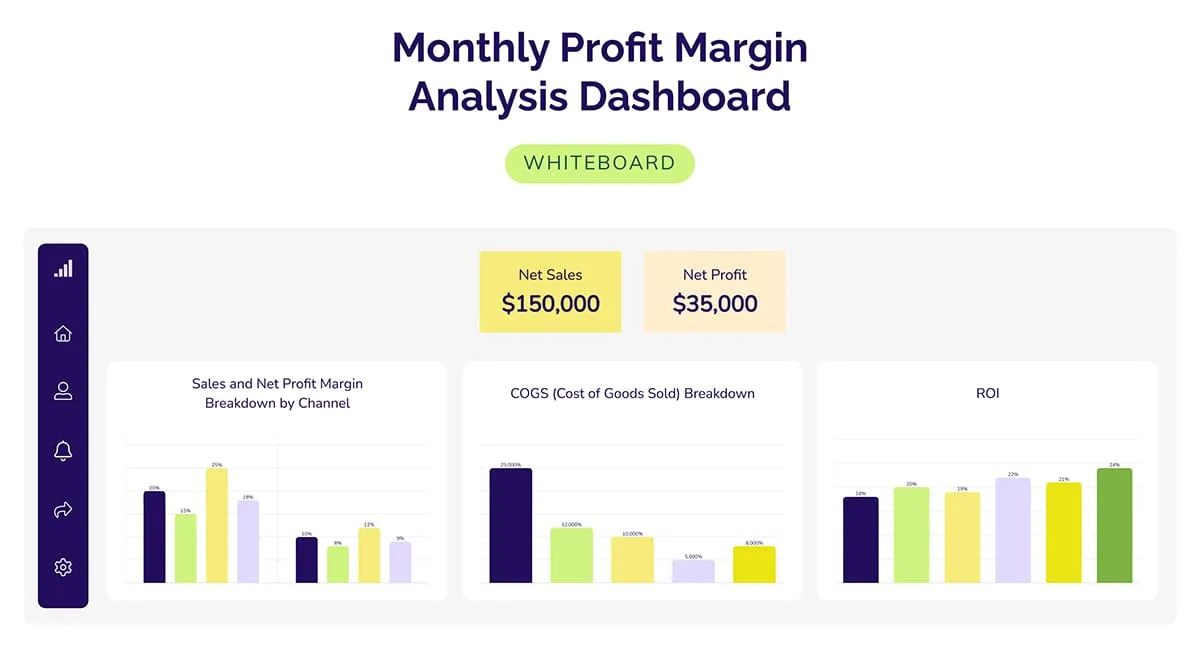
Use this core formula to establish your baseline ROI projection:
- Total Financial Gain = (Projected Revenue - Baseline Revenue) + Operational Savings
- Projected Revenue = Monthly Traffic x New Conversion Rate x New Average Order Value (AOV)
- Operational Savings = Manual Processing Hours Saved per Month x Hourly Staff Cost
- ROI (%) = [(Total Financial Gain - Investment Cost) / Investment Cost] x 100
By utilizing a structured conversion rate calculator ecommerce model, you prove to your financial team that you are maximizing the value of existing traffic without increasing customer acquisition costs (CAC).
Step-by-Step: Building Your Conversion Rate Calculator for B2B Ecommerce
Building a reliable spreadsheet-based calculator requires historical data and realistic, conservative projections. We recommend following this structured process to build your model:
- Establish Baseline Metrics: Extract your current monthly traffic, wholesale conversion rate, and average order value (AOV) from the last 12 months.
- Calculate Baseline Monthly Revenue: Multiply your monthly traffic by your current conversion rate and current AOV to set your benchmark.
- Model Three Conversion Lift Scenarios: Map out conservative (+0.25%), moderate (+0.50%), and aggressive (+1.00%) conversion rate increases.
- Calculate Projected Monthly Revenue: Apply each of the three conversion lift scenarios to your baseline traffic and AOV.
- Subtract Baseline Revenue: Deduct your baseline monthly revenue from your projected monthly revenue to isolate the gross monthly lift.
- Incorporate Implementation Costs: Deduct the cost of professional B2B CRO and UX design systems to find your net return.
To make this model bulletproof for executive review, always use the conservative scenario as your primary business case.
Shopify B2B Wholesale Optimization: Quantifying the ROI of Portal Migration
Legacy ERP portals and outdated B2B systems leak revenue through slow performance, friction-filled checkouts, and heavy administrative overhead. Migrating to Shopify Plus B2B reduces operational costs by automating manual tasks like customer registration, custom price lists, and net-payment term approvals as detailed in the Shopify Help Center B2B documentation.
Legacy Portals vs. Shopify Plus B2B (2026 Comparison)
Feature / Metric Legacy ERP Portals Shopify Plus B2B (2026) Order Processing Manual entry via email/phone (15-20 mins/order) Automated customer self-service (<1 min/order) Price List Management Manual spreadsheet uploads & custom dev Native, automated ERP-synced price lists Checkout Friction Multi-step, non-responsive legacy forms Optimized, single-page wholesale checkout Maintenance Overhead High hosting, security patching, licensing fees SaaS-based, fully managed cloud infrastructureCalculate your admin savings using our standard formula:
Annual Admin Savings = (Manual Orders per Year x Minutes Saved per Order / 60) x CSR Hourly Rate.
If your team processes 5,000 manual orders annually, and a migration to Shopify reduces order processing time by 15 minutes per order at a $25/hour labor rate, you save $31,250 annually in labor alone. Migrating to Shopify Plus requires robust custom enterprise development to seamlessly sync ERP inventory with your new wholesale portal.
Factoring in AOV and Reorder Frequency in B2B ROI Calculations
Unlike B2C retail, B2B ecommerce value is driven by high contract values, large order volumes, and predictable, recurring purchase cycles. When calculating your ROI, failing to account for purchase frequency and contract longevity will lead to a massive underestimation of your CRO program's value.
- AOV Expansion: Implementing wholesale features like quick-order grids, bulk-discount tiers, and minimum order quantities (MOQs) directly increases cart size.
- Reorder Frequency Lift: Features like "one-click reordering" and vaulting credit cards reduce purchase friction, increasing the number of orders placed per customer annually.
- Long-Term Value (LTV): Calculate the projected LTV impact by multiplying the AOV increase by the average annual order frequency and customer retention lifespan.
Improving site speed directly impacts these reorder rates; utilizing specialized technical SEO & GEO programs prevents friction during high-volume wholesale checkout sessions and ensures maximum search visibility.
Presenting the ROI Data: Securing Executive Buy-In for Your B2B CRO Budget
CFOs reject budget requests that rely on vanity metrics like page views, bounce rates, or user satisfaction scores. To secure approval, structure your proposal around financial metrics and risk mitigation.
Common Mistakes: What to Avoid
- Do not present single-point estimates: Presenting a single target ROI looks unrealistic; always present a range of outcomes.
- Do not ignore internal resource costs: Failing to include internal staff hours required for project management will damage your credibility.
- Do not omit the cost of inaction: Failing to show the cost of maintaining your current, low-converting system misses a key selling point.
How to Fix: Implementation Steps
- Present a three-tiered scenario model: Show conservative, target, and optimistic outcomes to demonstrate risk awareness.
- Amortize development costs: Spread the initial migration and development costs over 24 or 36 months to align with standard corporate accounting periods.
- Frame CRO as risk mitigation: Position conversion optimization as a strategy to lower customer acquisition costs (CAC) and protect market share from digital-first competitors.
How Avelize Approaches B2B Wholesale Optimization
Our team engineers high-performance B2B portals and conversion optimization programs tailored to complex wholesale operations. We follow a structured three-phase methodology to ensure measurable ROI:
- Technical Audit & Baseline Modeling (Weeks 1-3): We audit your current portal performance, map your ERP integrations, and establish your baseline conversion and admin-cost metrics.
- UX & Integration Engineering (Weeks 4-12): We design and build custom self-service checkout flows, quick-order grids, and automated net-term registration systems.
- Continuous CRO & Performance Tuning (Ongoing): We run continuous A/B testing and speed optimization sprints to maximize AOV and reorder frequency.
Ready to unlock hidden wholesale revenue? Partner with our team to design and execute a high-impact Conversion Rate Optimization (CRO) retainer tailored to your B2B business goals.
Published / Last reviewed: October 24, 2026
Related Avelize Services: Services · Ecommerce Web Design Agency