
Choosing a Shopify Plus Migration Consultant: Enterprise Guide
By:
Stop losing search traffic—protect your revenue and ERP data during replatforming with an expert Shopify Plus migration consultant.
When migrating an enterprise brand to Shopify Plus, we frequently observe merchants risking up to 30% of their organic search traffic and corrupting legacy ERP data due to poor technical execution. To protect your revenue, hiring a specialized Shopify Plus migration consultant is not optional; it is a critical safeguard for your database schemas, API integrations, and search engine visibility. In our work with merchants, we deploy structured engineering frameworks to ensure seamless transitions from legacy platforms like Magento or Salesforce Commerce Cloud.
Key Takeaways
- Data Schema Mapping: Transitioning from legacy relational databases to Shopify flat metafield and metaobject structures requires custom normalization.
- SEO Preservation: A strict 1:1 redirect mapping strategy is mandatory to protect organic search equity across 100,000+ URLs.
- ERP Integration: Middleware like Celigo or MuleSoft must be configured to prevent API rate-limiting issues on Shopify Plus.
- Checkout Extensibility: Custom B2B pricing and loyalty rules must be migrated using Shopify Functions rather than bloated third-party apps.
What Does a Shopify Plus Migration Consultant Actually Do vs. a Standard Agency?
A Shopify Plus migration consultant is an enterprise-grade technical architect who designs, oversees, and executes the transition of complex data structures, ERP integrations, and legacy SEO equity from platforms like Magento or Salesforce to Shopify Plus, whereas standard agencies focus primarily on front-end template design and basic app configuration.
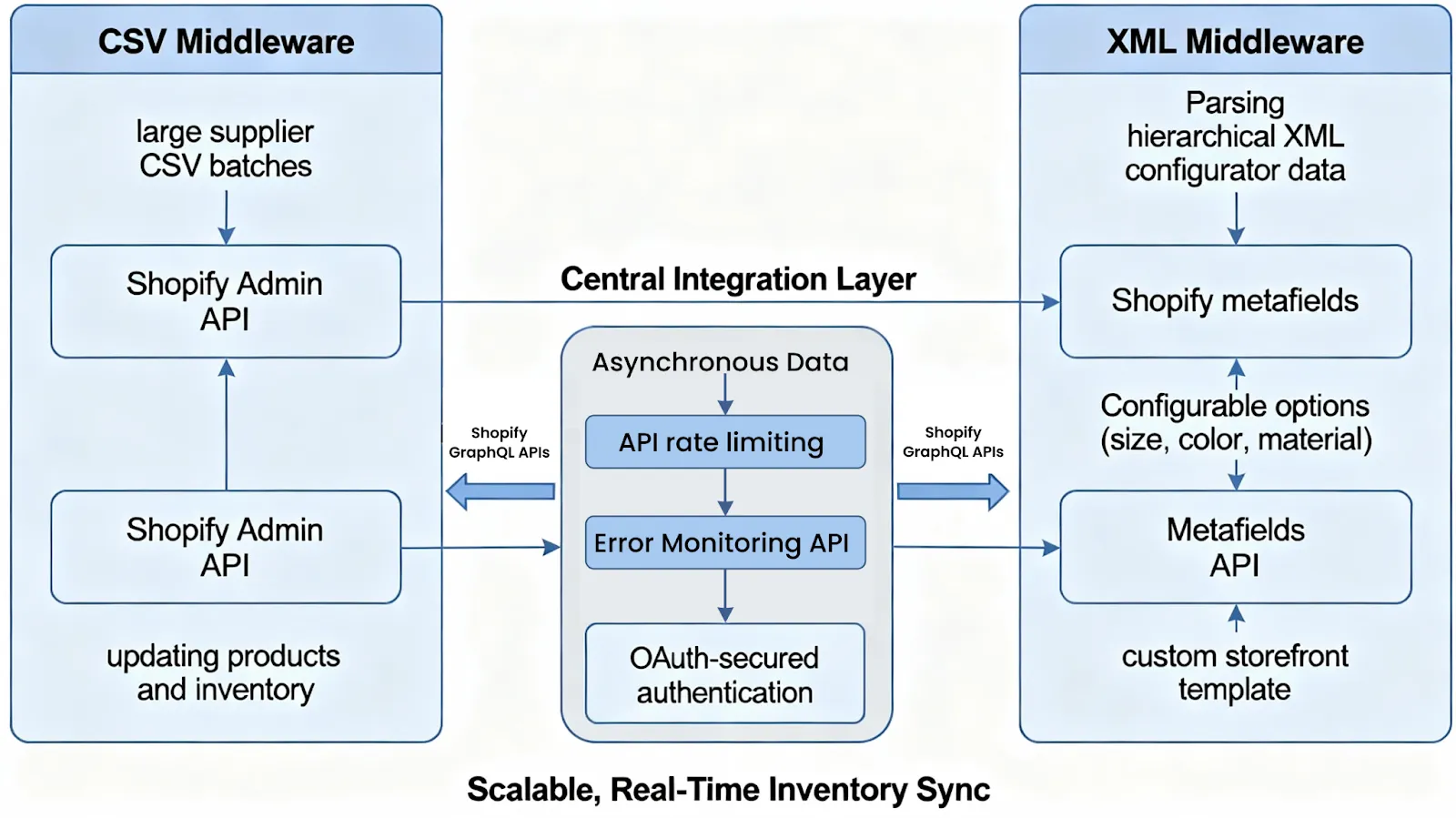
Standard agencies treat migrations as front-end design projects with basic data import and export tasks. They rely on automated migration apps that fail when handling complex legacy databases, multi-currency architectures, and deep ERP integrations.
An enterprise consultant manages the complete technical architecture. They map database schemas, design custom middleware, and coordinate API integrations to ensure systems like SAP, NetSuite, or Microsoft Dynamics sync seamlessly with Shopify.
They also oversee the transition of complex front-end features. If your brand requires specialized UI elements or custom checkouts, they leverage custom Shopify development to build scalable solutions rather than relying on bloated third-party apps.
5 Non-Negotiable Technical Capabilities to Vet in an Enterprise Shopify Migration Partner
- Data Normalization: The ability to map nested, complex product attributes from legacy databases into Shopify flat metafield and metaobject structures.
- Custom Middleware and API Orchestration: Deep experience configuring middleware like Celigo or MuleSoft to sync real-time inventory, pricing, and customer data.
- Advanced SEO Architecture: Proven capability to execute 1:1 redirect mapping for over 100,000 URLs while working within Shopify's rigid subfolder structure.
- Custom Checkout and Scripting: Proficiency in configuring Shopify Functions and Checkout Extensibility to preserve complex B2B pricing rules and legacy loyalty programs.
- Performance Tuning: Direct expertise in minimizing third-party script bloat and optimizing core web vitals using Shopify speed optimization best practices.
The SEO Preservation Framework Your Consultant Must Present to Protect Organic Revenue
To prevent catastrophic traffic loss, your consultant must execute a structured SEO preservation process. This systematic framework ensures your legacy authority transfers directly to your new Shopify store.
Step 1: Crawl and Inventory All Legacy URLs
Perform a comprehensive crawl of all live, staging, and historical URLs using Screaming Frog to identify every indexable page, image, and PDF asset currently driving traffic.
Step 2: Map Legacy URLs to Shopify Structure
Create a 1:1 redirect map. Because Shopify enforces rigid URL paths, legacy paths like /category/product-name.html must be mapped directly to /products/product-name.
Step 3: Preserve Metadata and Schema Markup
Extract and migrate all meta titles, descriptions, H1 tags, and structured schema data. Utilize specialized Shopify SEO services to automate this migration across large catalogs.
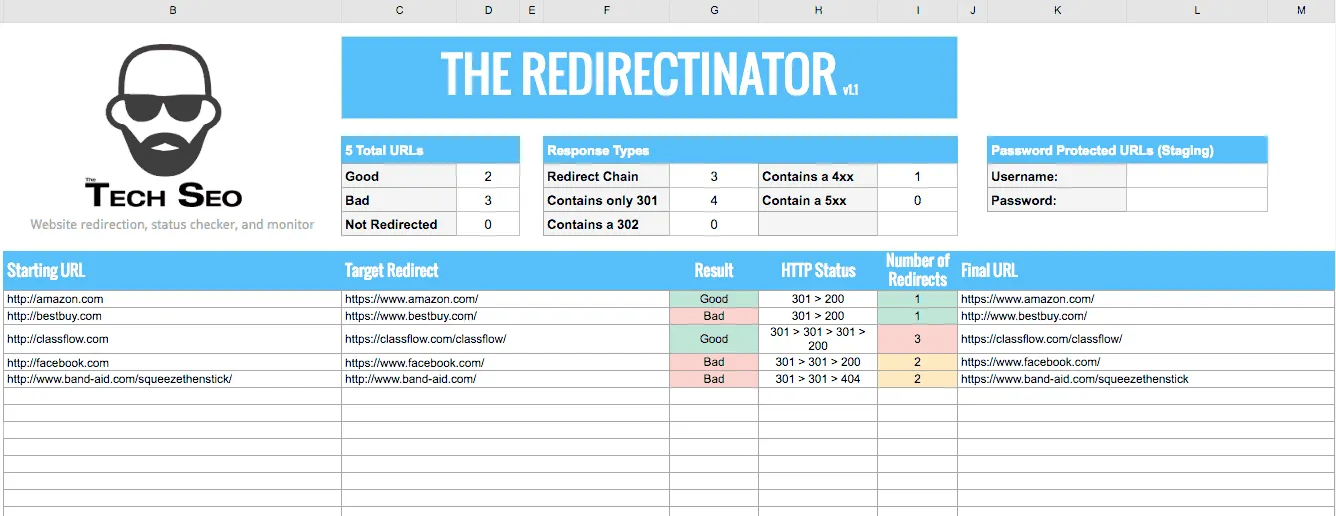
Step 4: Configure and Test Redirect Rules
Upload redirect rules directly to Shopify. If your legacy site has more than 100,000 URLs, your consultant must configure these redirects at the DNS or CDN level using Cloudflare.
Step 5: Execute Post-Launch Audits
Run automated site crawls within 24 hours of launching. Verify status codes, check for broken internal links, and monitor Google Search Console for crawl errors.
Red Flags: How to Spot a Generalist Agency Posing as an Enterprise Shopify Plus Implementation Expert
Many agencies claim enterprise expertise but rely on junior developers and automated tools. Watch out for these common warning signs during the vetting process:
- Recommending standard import apps for complex catalogs with extensive product variations and parent-child relationships.
- Proposing wildcard redirects to the homepage instead of mapping individual URLs, which destroys search engine rankings.
- Suggesting direct, point-to-point integrations for complex ERPs without using a middleware layer, leading to API rate-limiting issues.
- Recommending leaving legacy customer order history behind rather than migrating historical transaction details.
- Treating SEO as a post-launch task rather than integrating technical SEO and data planning into the initial discovery phase.
The Enterprise RFP Scorecard: 10 Questions to Ask During the Pitch
Use these specific technical questions to evaluate candidates during your RFP process. Score their answers based on technical depth and direct experience.
- How do you handle Shopify's limit of 100,000 redirects if our legacy site has more than 250,000 indexed URLs?
- What middleware do you recommend for syncing inventory with our specific ERP, and what are its API limitations?
- How will you map our legacy database model to Shopify metafields without losing historical product attributes?
- Can you provide a detailed technical architecture diagram of an enterprise integration you completed recently?
- How do you handle customer account migration, including password migration, without requiring users to reset passwords?
- What is your exact QA process for verifying that 301 redirects are functioning correctly post-launch?
- How do you manage API rate limits on Shopify Plus when syncing high-volume transactional data?
- What is your strategy for preserving localized SEO rankings across multi-regional expansion stores?
- How do you ensure legacy product reviews and blog posts are migrated without losing formatting or search equity?
- Who on your team will directly manage our data mapping, and what is their specific enterprise migration experience?
Scoping the SOW: What Deliverables Must Be Explicitly Written Into Your Migration Contract
Do not sign a Statement of Work that only promises a launched website. Ensure these specific deliverables are written into your contract with clear acceptance criteria:
- Data Migration Schema: A field-by-field mapping document outlining legacy database fields mapped to Shopify standard fields, metafields, and metaobjects.
- SEO Migration Blueprint: A complete 1:1 redirect mapping document, canonical tag strategy, and XML sitemap configuration plan.
- Integration Architecture Specification: Technical documentation detailing all API endpoints, middleware configurations, error handling protocols, and sync schedules.
- Load and Performance Testing: Documented load testing protocols showing the site can handle peak transaction volumes without speed degradation.
- UAT Scripts: Step-by-step user acceptance testing protocols for order placement, inventory sync, customer creation, and refund processing.
- Post-Launch Support Agreement: A minimum of 30 days of dedicated, hyper-care technical support with defined SLA response times for critical bugs.
How Avelize Approaches Shopify Plus Migrations in 2026
At Avelize, we treat migrations as rigorous engineering projects, not simple design updates. Our proprietary "BFCM-30 rollback playbook" and "three-store split" methodology ensure zero-downtime launches. We execute migrations over a structured 12-to-16 week timeline, with pricing starting at $45,000 depending on ERP complexity. Our primary KPI is 100% data integrity and less than a 3% fluctuation in post-launch organic traffic.
Ready to transition your enterprise store without risking your search rankings or data integrity? Contact our team today to discuss our Technical SEO & GEO programs.
Published / Last reviewed: February 2026
Related Avelize Services: Services · Ecommerce Web Design Agency