
Agentic Commerce for Shopify: AI Merchandising in 2026
By:
Agentic Commerce For Shopify AI Merchandising In 2026: a practical Shopify Plus guide to the SEO, CRO, and revenue decisions that matter for ecommerce teams.
To implement agentic commerce Shopify integrations successfully, merchants must deploy autonomous AI agents that connect directly to the Shopify GraphQL Admin API. By utilizing a continuous Observe-Plan-Act loop, our team builds systems that automate dynamic collection sorting, real-time search redirects, and inventory-aware upsells. This guide provides the exact technical architecture to transition your storefront from static, manual merchandising rules to an autonomous, high-converting discovery engine.
Key Takeaways
- Autonomous Execution: Replace manual sorting with an automated Observe-Plan-Act loop powered by Shopify's GraphQL Admin API.
- Dynamic Guardrails: Protect margins by enforcing a strict 15% discount floor and limiting mutations to 50 API calls per hour.
- Real-Time Personalization: Re-rank collections dynamically based on a 60% margin threshold and real-time conversion velocity spikes.
- Semantic Discovery: Map zero-result search queries to automated synonym groups to eliminate customer drop-offs.
Why Traditional Shopify Merchandising Rules Fail and How Agentic Commerce Solves It
Agentic commerce Shopify integration refers to connecting autonomous AI agents with the Shopify API to make real-time, data-driven decisions—such as dynamically adjusting collection sorting, automating inventory-based upsells, and restructuring search redirects—without manual human intervention or static, rule-based configurations.

Traditional Shopify merchandising relies on static, rule-based systems that cannot adapt to rapid market changes. When inventory drops or a product trend spikes, manual rules leave out-of-stock items at the top of collections or miss high-margin upsell opportunities.
Agentic commerce solves this by deploying autonomous decision-making loops directly into your store's backend. These agents continuously analyze real-time customer behavior, inventory levels, and margin data to execute micro-optimizations. By offloading these tasks to autonomous agents, brands can refocus engineering resources on custom Shopify development to scale core infrastructure.
Static Merchandising vs. Autonomous AI Agents
Feature Static Merchandising Rules Autonomous AI Agents Sorting Logic Manual rules or static best-seller history Real-time margin, inventory, and velocity scoring Search Optimization Manual synonym tagging and redirect maps Automated LLM-driven zero-result query mapping Inventory Awareness Requires manual adjustment when sizes break Automatic deprioritization based on Days of Supply (DoS) Operational Overhead Drains 10–30 hours of manual work weekly Fully automated with programmatic guardrailsThe Technical Architecture: Connecting Autonomous AI Agents to the Shopify GraphQL Admin API
To build an agentic commerce workflow, you must connect an AI orchestration framework to Shopify's GraphQL Admin API. The agent operates on a continuous Observe-Plan-Act loop using webhooks and API mutations.
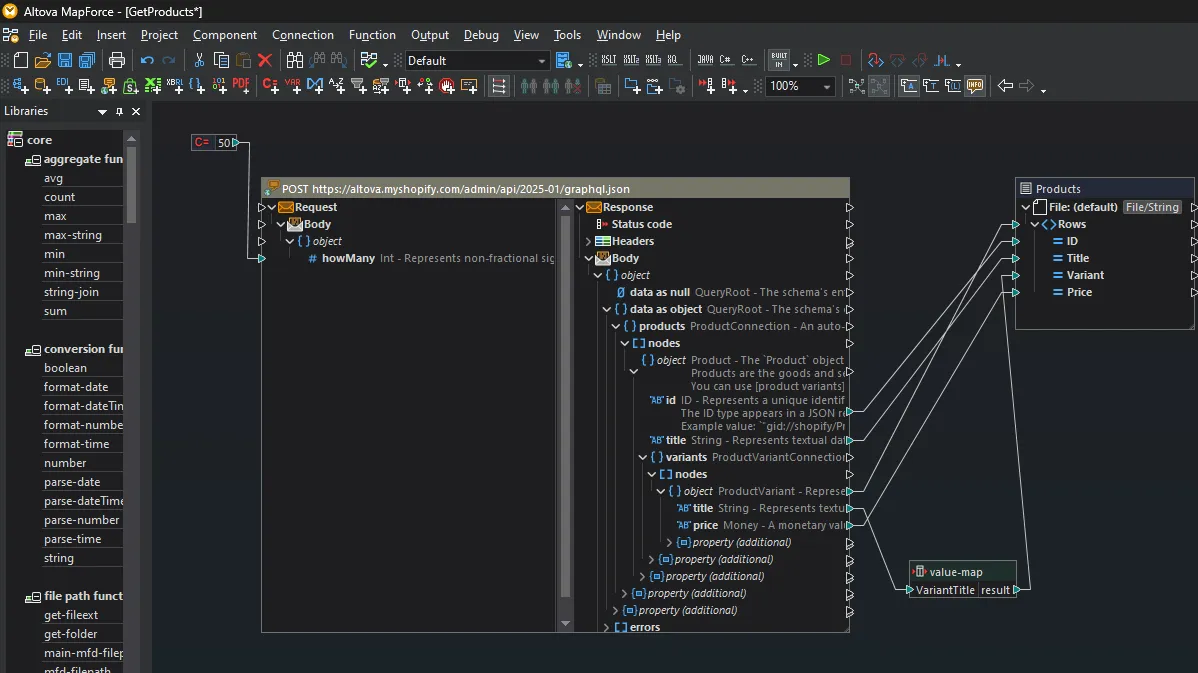
- Webhooks: Listen for real-time events including inventory updates, order creations, and product catalog changes.
- Vector Database: Store product metadata, semantic search logs, and conversion data to provide context for the agent.
- LLM Orchestrator: Process incoming events, evaluate business rules, and generate structured JSON payloads.
- GraphQL Mutations: Execute updates using collection reordering or product update mutations.
This architecture ensures low-latency execution and prevents API rate-limiting issues by utilizing Shopify's GraphQL cost-allocation system. For brands running headless or highly customized setups, integrating this data layer requires robust SEO & Data architecture to maintain crawlability and page speed.
How to Use Shopify AI and Agentic Workflows to Automate Merchandising and Product Discovery
Automating product discovery requires shifting from static tags to dynamic, semantic relationships. AI agents analyze customer search queries to build real-time redirect maps and synonym listings.
- Map Search Intent: Configure the agent to monitor zero-result search terms daily.
- Generate Synonyms: Program the LLM to write automatic synonym groups for regional dialects or common typos.
- Deploy Redirects: Use mutations to instantly route high-intent queries to relevant collections.
- Update Product Tags: Allow the agent to append hidden utility tags based on real-time search trends to improve filtering accuracy.
This operational loop ensures that users always find relevant products, directly boosting search conversion metrics.
Configuring AI Ecommerce Personalization Agents for Real-Time Collection Sorting and Dynamic Bundling
Static collection sorting based on best-selling history fails to account for margin changes or seasonal velocity. As we scale merchant capabilities in 2026, AI personalization agents dynamically re-rank collections by calculating a real-time score for each SKU using the Margin-DoS-Velocity scoring matrix:
- Margin Weight: Prioritize SKUs with margins above 60% when traffic spikes.
- Inventory Days of Supply (DoS): De-prioritize items with less than 5 days of stock to prevent broken-size bounce rates.
- Conversion Velocity: Elevate items showing a 20% click-to-cart increase over the last 2 hours.
- Dynamic Bundling: Generate real-time product bundles on the product detail page using purchase history correlation.
Establishing Guardrails: Monitoring Agent Decisions to Protect Brand Margins and UX
Autonomous agents require strict operational boundaries to prevent margin erosion and broken user experiences. Without guardrails, an agent might discount high-demand items or create infinite redirect loops.
What to Avoid
- Letting agents adjust prices or discounts without a hard floor limit of 15%.
- Allowing real-time collection sorting to run during peak traffic hours without caching, which degrades Shopify speed optimization performance.
- Failing to set up human-in-the-loop approvals for structural changes like bulk product deletions or main navigation redirects.
How to Fix and Implement Guardrails
- Implement Pydantic Schemas: Force all agent outputs to validate against a strict JSON schema before hitting the Shopify API.
- Set Rate Limits: Restrict the agent to a maximum of 50 API mutations per hour to prevent runaway loops.
- Establish an Alerting Threshold: Trigger Slack or email alerts if the agent attempts to modify more than 10% of catalog pricing in a single run.
- Run Dry-Run Simulations: Test agent decisions in a staging environment for 72 hours before pushing mutations to production.
How Avelize Approaches Agentic Commerce
Our team engineers custom agentic commerce pipelines tailored to your brand's unique inventory dynamics and margin profiles. We implement the Observe-Plan-Act mutation loop within 4 to 6 weeks, establishing strict JSON validation schemas and dry-run staging environments to protect your live storefront. By integrating these autonomous systems, we help Shopify Plus merchants eliminate manual merchandising overhead while driving measurable lifts in search-to-cart conversion rates.
Ready to automate your storefront operations and scale your merchandising efficiency? Explore our custom Shopify development services or contact our team to design your autonomous agent architecture.
Published: October 24, 2024 | Last reviewed: May 15, 2026
Shopify Plus Conversion Review Framework
Conversion work on Shopify Plus should connect user experience, technical performance, merchandising, checkout behavior, and measurement quality. A redesign alone rarely fixes conversion if the page is slow, the offer is unclear, or analytics cannot explain where users hesitate.
- Review PDP clarity, trust signals, product discovery, and mobile usability.
- Audit app and script impact on Core Web Vitals and checkout flow.
- Compare conversion drop-offs by device, traffic source, product type, and landing page.
- Turn findings into a prioritized CRO backlog with measurable hypotheses.
Authoritative References
Use these official resources to verify platform-specific claims and implementation details before making commercial or technical decisions.
- Shopify Plus overview
- Shopify Functions documentation
- Checkout Extensibility documentation
- Google Search Central: Core Web Vitals
Related Avelize Services and Guides: Services · Ecommerce Web Design Agency