
Programmatic SEO for Ecommerce: Scale 100K+ SKUs Safely
By:
Programmatic SEO For Ecommerce Scale 100K+ Skus Safely: a practical Shopify Plus guide to the SEO, CRO, and revenue decisions that matter for ecommerce teams.
How do enterprise merchants scale search visibility across 100,000+ SKUs without destroying server performance or rendering capabilities? The answer lies in decoupling the database from the routing layer, optimizing rendering pipelines, and automating internal linking. By implementing structured database schemas and server-side rendering, we ensure search engines index deep catalog pages efficiently while maintaining optimal Core Web Vitals.
Key Takeaways
- The O(1) Routing Pattern: Decouple the database from routing using key-value stores to resolve URL slugs instantly.
- The 10K Sitemap Partition: Split XML sitemaps into 10,000-URL chunks to accelerate Googlebot processing times.
- The 3600-Second ISR Window: Use Incremental Static Regeneration with a 1-hour revalidate cache to balance freshness and server load.
- The 150-Link Cap: Limit outbound links on dynamic hub pages to preserve PageRank distribution.
What is Programmatic SEO for Ecommerce and Why Does Database Schema Matter?
Programmatic SEO for ecommerce is the automated generation of search-optimized category, brand, and product pages at scale using structured database inputs. By generating thousands of targeted, high-intent landing pages dynamically, enterprise sites capture long-tail search volume without manual page creation.

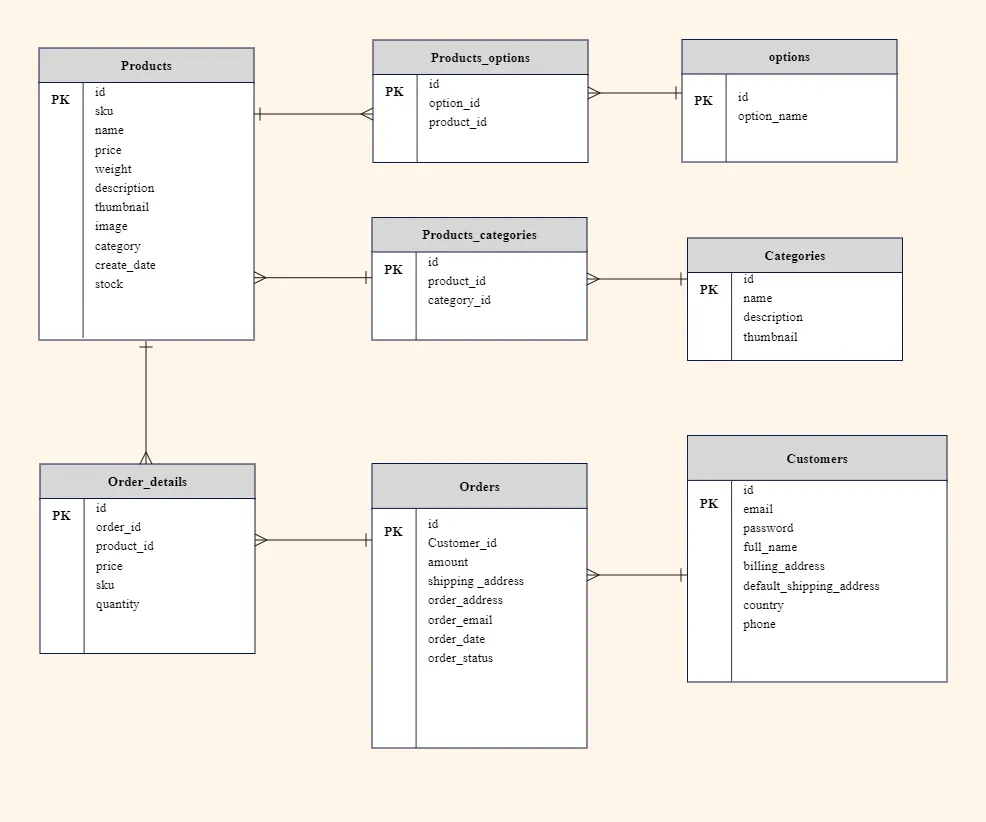
To prevent performance bottlenecks, we decouple the database from the routing layer. Using a key-value store or a highly indexed PostgreSQL database to serve route parameters is essential for large-scale catalogs.
- Implement flat URL structures to prevent deep nesting:
/c/[category]/[subcategory]and/p/[sku-slug]. - Store URL slugs in a dedicated database index to achieve O(1) lookups during dynamic routing resolution.
- Map database relationships so that parent-child categories dynamically resolve canonical tags to prevent duplicate content loops.
- For platforms built on complex stacks, utilizing custom enterprise architectures like our headless and custom development services ensures database queries do not block page generation.
How Do You Optimize Crawl Budget for Large-Scale Catalogs?
Googlebot will abandon crawling if it encounters inefficient paths or unindexed sitemaps. Large catalogs require strict boundaries to guide search crawlers efficiently.
- Partition XML sitemaps into files containing a maximum of 10,000 URLs each, well below the standard 50,000 limit, to accelerate processing.
- Group sitemaps by page type:
sitemap-categories.xml,sitemap-products-1.xml,sitemap-products-2.xml. - Use the
lastmodtag dynamically, updating it only when a critical product schema attribute (price, availability, description) changes. - Configure
robots.txtto disallow infinite faceted navigation paths (e.g.,Disallow: /*?*filter=). - Allow crawl access to critical JavaScript and CSS assets so Googlebot can render pages accurately.
What is the Ultimate Javascript SEO Checklist for Headless Catalogs?
Modern frameworks like Next.js and Nuxt.js must be configured to deliver fully rendered HTML on the initial request. Relying on client-side rendering (CSR) results in delayed indexing.
- Use Incremental Static Regeneration (ISR) for product pages with a
revalidatewindow of 3600 seconds (1 hour) to balance freshness and server load. - Deploy Server-Side Rendering (SSR) with edge caching (CDN) for high-velocity inventory pages where stock levels change by the minute.
- Ensure the HTML payload matches the hydrated DOM exactly to prevent hydration mismatches that delay first input delay (FID) and Interaction to Next Paint (INP).
- To optimize these complex configurations, our specialized technical SEO and programmatic data services can audit and align your rendering pipeline.
How Does Automated Internal Linking Prevent Orphan Pages?
Search engines discover and distribute PageRank to deep SKU pages through structured internal links. Automated linking systems must be programmatic and contextually relevant.
- Generate dynamic breadcrumbs on every product page based on the primary category path, ensuring each node is linked and marked up with BreadcrumbList schema.
- Implement contextual dynamic hubs on category pages that link to the top 10 most popular products in that category using real-time sales data.
- Incorporate "frequently bought together" or "related products" modules on SKU pages using database tags to ensure no product page becomes an orphan.
- Limit the total number of outbound links on any single hub page to 150 links to preserve link equity distribution.
Technical SEO Checklist 2026: Automated Schema Markup and Core Web Vitals at Scale
Use this checklist to audit and automate structured data and performance metrics across your entire programmatic catalog.
- Automate Product Schema: Inject dynamic JSON-LD schema on all SKU pages containing real-time values for
price,priceCurrency,availability, andsku. - AggregateRating Integration: Pull verified review schema programmatically to display star ratings directly in SERPs.
- Optimize LCP Images: Ensure the main product image uses
priorityloading tags in Next.js (next/image) orfetchpriority="high"in Nuxt. - Set Explicit Dimensions: Prevent cumulative layout shift (CLS) by hardcoding width and height attributes on all media and container wrappers.
- Minimize Main-Thread Work: Defer non-critical third-party scripts (e.g., analytics, heatmaps) until after the page achieves complete hydration.
Monitoring and Log File Analysis: Tracking Googlebot Render Success Rates
Automated deployments require real-time monitoring of crawl behavior and rendering health.
- Analyze server log files weekly to monitor the ratio of 200 OK status codes against 4xx and 5xx errors generated by Googlebot.
- Track the crawl frequency of your XML sitemaps to verify that newly generated programmatic pages are discovered within 24 hours.
- Monitor Google Search Console’s "Crawled - currently not indexed" report to identify pages suffering from thin content or rendering timeouts.
- Verify that Googlebot renders the exact same content as desktop users by running automated mobile-friendly tests on sample programmatic templates.
Common Mistakes in Enterprise Programmatic SEO
Avoid these critical architectural errors when scaling your e-commerce catalog:
- Generating millions of thin-content pages with near-identical descriptions, which triggers Google's quality algorithms and wastes crawl budget.
- Failing to set correct canonical tags on faceted navigation URLs, leading to massive internal duplicate content issues.
- Relying on client-side API calls to load product descriptions, leaving search engine crawlers with blank, unindexable pages.
- Neglecting server performance, resulting in high Time to First Byte (TTFB) that causes Googlebot to slow down its crawl rate.
How Avelize Approaches Programmatic SEO Architecture
Our team implements programmatic SEO through a structured, risk-mitigated engineering process designed to protect server health and maximize indexation rates:
- Phase 1: Database & Routing Audit (Weeks 1-2): We analyze your current catalog schema and design an O(1) key-value routing layer. KPI: Under 50ms query resolution.
- Phase 2: Rendering Pipeline Engineering (Weeks 3-5): We configure ISR and edge-cached SSR pipelines on your headless storefront. KPI: Under 200ms TTFB.
- Phase 3: Automated Internal Linking & Schema (Weeks 6-7): We build dynamic breadcrumbs, contextual hubs, and automated JSON-LD schemas. KPI: 100% schema validation.
- Phase 4: Crawl Monitoring & Log Analysis (Ongoing): We audit server logs weekly to track Googlebot render success rates. KPI: 95%+ crawl coverage.
Frequently Asked Questions
Is programmatic SEO worth it for ecommerce?
Yes, programmatic SEO is highly valuable for enterprise ecommerce sites with large catalogs. By automating page creation for specific long-tail search queries, brands can capture high-intent traffic at a fraction of the cost of manual content creation, while maintaining absolute control over page templates and performance.
How long does programmatic SEO take to show results?
Typically, programmatic SEO implementations show initial indexing and traffic movements within 4 to 8 weeks of sitemap submission, provided that the technical architecture prevents crawl budget depletion and rendering issues.
What's the difference between programmatic SEO and dynamic rendering?
Programmatic SEO and dynamic rendering are distinct technical methodologies used to solve different search engine indexing challenges. Programmatic SEO is the automated creation of thousands of unique, search-optimized landing pages generated dynamically from database inputs to capture long-tail search volume. In contrast, dynamic rendering is a temporary workaround where a server detects search crawlers and serves them a pre-rendered HTML version of a page, while human users receive the standard client-side JavaScript application. According to Google's official documentation, dynamic rendering is no longer a recommended long-term solution due to its high maintenance overhead and the evolution of Googlebot's rendering capabilities. Instead, modern enterprise architectures should implement server-side rendering (SSR) or incremental static regeneration (ISR) to deliver identical, fully rendered HTML payloads to both users and search crawlers, ensuring optimal Core Web Vitals and consistent indexation across all search engines.
Need to scale your catalog's organic footprint without crashing your servers? Learn how our team engineers high-performance architectures through our Technical SEO & GEO programs.
Published / Last reviewed: January 15, 2026
Search Intent Refresh Notes
This page has search demand in Google Search Console. Refresh it around the highest-impression query language, add concrete examples, clarify the decision criteria, and link to the most relevant service page or related guide.
Authoritative References
Use these official resources to verify platform-specific claims and implementation details before making commercial or technical decisions.
- Shopify Plus overview
- Google SEO Starter Guide
- Google canonicalization guide
- Google structured data introduction
Related Avelize Services and Guides: Services · Ecommerce Web Design Agency