
Shopify Plus International Expansion: Architectural Strategy
By:
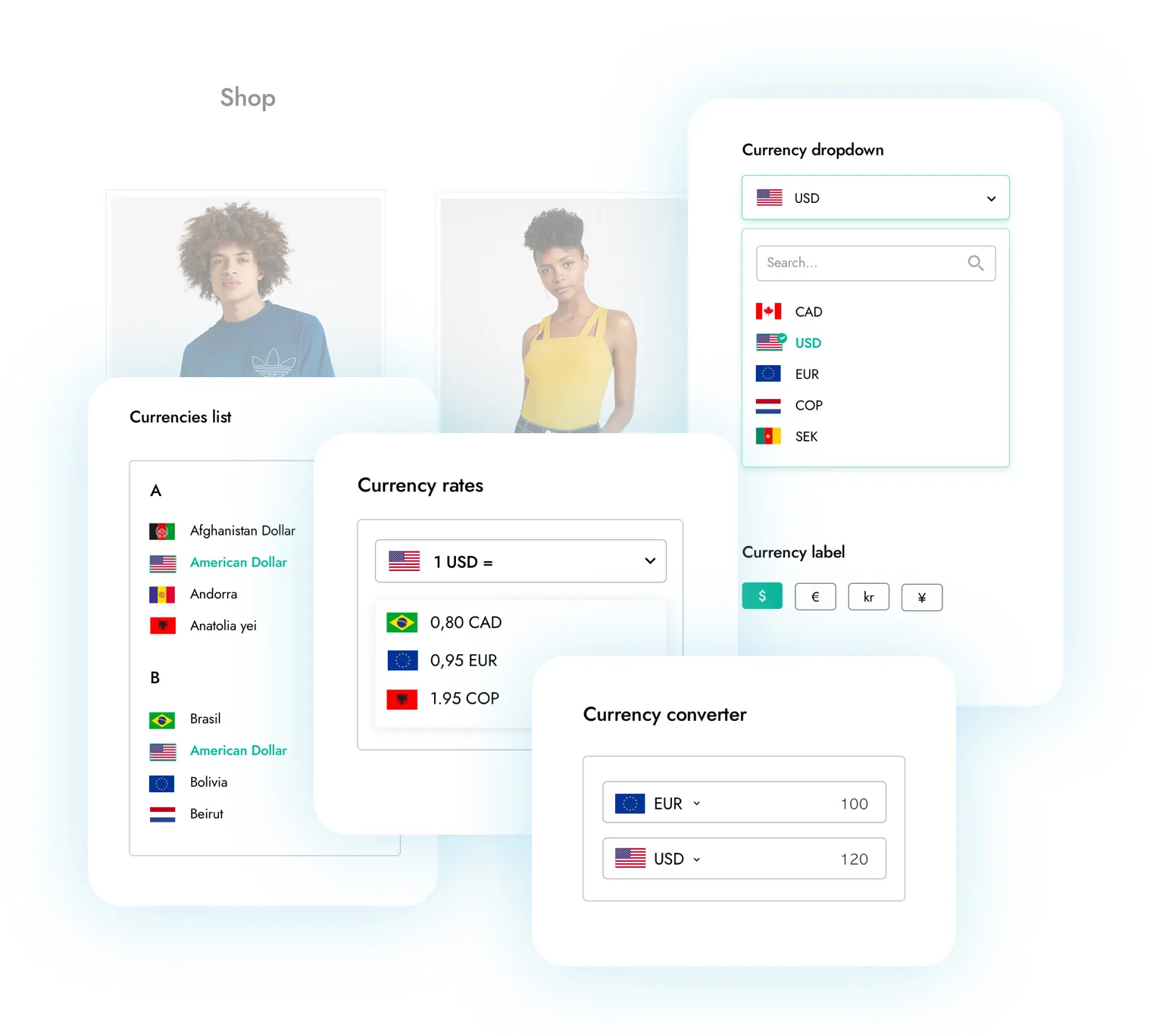
Stop losing global sales to checkout friction. Scale seamlessly with our technical blueprint for Shopify Plus international expansion.
To execute a successful Shopify Plus international expansion, merchants must choose between a single-store Shopify Markets setup and a multi-store dedicated expansion architecture. Our team recommends Shopify Markets for centralized inventories and unified catalogs, while dedicated expansion stores are required for localized ERP integrations and independent legal entities. By aligning your URL structure, localized payment gateways, and automated landed cost calculations, you can scale global operations without accumulating technical debt.
Key Takeaways
- The 125-Currency Limit: Shopify Markets supports up to 125 checkout currencies, beyond which dedicated expansion stores are required.
- Consolidated Domain Authority: Use subdirectory URL structures (e.g., brand.com/fr) to maximize international SEO equity.
- The 5% Buffer Stock Rule: Implement a 5% inventory buffer in your ERP middleware to prevent high-velocity overselling across global nodes.
- DDP Compliance: Always configure Delivered Duty Paid (DDP) at checkout to eliminate unexpected customs fees and reduce package rejection rates.
Shopify Markets vs. Dedicated Expansion Stores in 2026
Managing a Shopify Plus international expansion often introduces severe ERP sync errors and inventory discrepancies if the wrong architecture is selected. This guide provides the exact technical blueprints to configure localized storefronts, route SEO traffic, and sync global warehouse inventory without building technical debt.
Shopify Markets is a centralized localization tool that allows merchants to manage global currencies, languages, and pricing from a single Shopify admin. Conversely, dedicated expansion stores are independent Shopify Plus instances configured for specific regional markets, requiring separate admin panels and distinct backend integrations.
Feature Shopify Markets (Single Store) Dedicated Expansion Stores (Multi-Store) Inventory Management Centralized (Shared Pools) Decentralized (Isolated Pools) Currency Limit Up to 125 checkout currencies Unlimited (per store gateway) Catalog Customization Shared catalog with price lists Fully independent catalogs ERP Integration Single ERP connection Multiple regional ERP connections Maintenance Overhead Low (Single codebase) High (Multiple codebases)In our work with merchants, we find that selecting the wrong architecture introduces severe ERP sync errors. For Shopify Plus international expansion, choose Shopify Markets if you require centralized inventory, unified product catalogs, and simplified administration under one admin. Opt for dedicated expansion stores when regions require completely distinct ERP integrations, unique product catalogs, localized legal entities, or independent warehouse operations.
If you need customized business logic to bridge these setups, our team provides custom Shopify development to integrate complex catalog rules.
URL Structure and SEO Routing: Configuring Subdirectories, Subdomains, and ccTLDs
Selecting the right URL structure impacts your search visibility and technical maintenance. To ensure search engines crawl and rank the correct localized pages, we recommend implementing a structured hreflang strategy. Our team provides technical guidance through our technical SEO & GEO programs.
- Subdirectories (e.g., brand.com/fr): Best for consolidating domain authority. Highly recommended for Shopify Markets setups.
- Subdomains (e.g., fr.brand.com): Useful if regional stores require separate hosting or completely different codebases.
- ccTLDs (e.g., brand.fr): Offers the highest local trust signal but splits domain authority, requiring independent SEO campaigns for each domain.
Technical Checklist for International SEO Setup
- Verify hreflang tags map 1:1 across all localized URLs to prevent duplicate content penalties.
- Set up automated geo-IP redirection with an opt-in banner instead of forced, hard redirects.
- Configure Google Search Console properties for each localized subdirectory or domain to monitor regional search performance.
International Payment Processing: Setting Up Localized Currencies and Alternative Payment Methods (APMs)
Offering localized payment options directly impacts checkout conversion rates. Customers are highly likely to abandon carts if they cannot pay in their local currency or via their preferred local payment method.
Alternative Payment Methods (APMs) are region-specific financial transaction protocols—such as iDEAL in the Netherlands, Bancontact in Belgium, or Boleto in Brazil—that operate outside traditional credit card networks.
- Localized Currencies: Enable Shopify Payments to automatically convert prices based on real-time foreign exchange rates.
- Alternative Payment Methods (APMs): Integrate region-specific gateways like iDEAL in the Netherlands, Bancontact in Belgium, or Boleto in Brazil.
What to Avoid (Common Mistakes)
- Forcing USD checkout on international users, which triggers high foreign transaction fees.
- Failing to display local tax-inclusive pricing where legally required, such as VAT in the UK and European Union.
- Relying on dynamic auto-conversion rates without setting static price rounding rules.
How to Implement Localized Pricing
We implement the multi-market pricing protocol to ensure pricing consistency and local trust:
- Enable Shopify Payments multi-currency in your Shopify Admin.
- Define rounding rules (e.g., ending all converted prices in .95 or .00) per market.
- Activate region-specific APMs in your Shopify payment settings based on customer shipping address. Offering local APMs can increase checkout conversion rates by up to 20% in European markets.
Inventory and ERP Integration: Syncing Multi-Location Inventory Across Global Warehouses
To prevent overselling across global nodes, you must align your middleware; explore our specialized development services to build robust API integrations between your ERP and Shopify.
- Single-Store (Markets) Sync: Map Shopify "Locations" to specific physical warehouses. Shopify will automatically route orders to the closest warehouse with available stock.
- Multi-Store Sync: Use an Enterprise Resource Planning (ERP) system or Inventory Management System (IMS) like NetSuite or Brightpearl as the single source of truth to push stock levels to each individual store.
Inventory Management Rules
We utilize the multi-market inventory routing protocol to mitigate stock discrepancies:
- Implement buffer stock rules in your middleware to hold back 5% of inventory for high-velocity SKUs, mitigating overselling risks.
- Set up automated inventory routing rules to redirect orders to secondary warehouses if the primary regional facility runs out of stock.
Duty and Tax Compliance: Automating Landed Cost Calculations at Checkout
Unexpected customs duties at delivery lead to rejected packages and high return shipping costs. Calculating the total landed cost at checkout is critical for a seamless customer experience.
Delivered Duty Paid (DDP) is a shipping agreement where the merchant assumes all responsibility, risks, and costs of transporting goods until the buyer receives them, including customs duties and taxes collected at checkout.
- Delivered Duty Paid (DDP): Collect duties and taxes at checkout so the customer faces no additional charges upon delivery.
- Delivered Duty Unpaid (DDU): The customer pays customs fees directly to the carrier before receiving the package. This significantly reduces repeat purchase rates.
Landed Cost Implementation Steps
- Assign accurate Harmonized System (HS) codes to 100% of your product catalog in Shopify.
- Activate Shopify Markets Pro or integrate a third-party tax engine like Avalara or Vertex to calculate real-time duties and import taxes at checkout.
- Display a clear breakdown of duties, taxes, and shipping fees on the final payment page to build buyer trust.
How Avelize Approaches International Expansion
Our team approaches international expansion through a structured, three-phase technical program:
- Phase 1: Architectural Discovery & Mapping (Weeks 1-2 | KPI: Approved technical blueprint and ERP mapping schema).
- Phase 2: Localization & Payment Integration (Weeks 3-6 | KPI: 100% accurate multi-currency checkout and local APM activation).
- Phase 3: SEO Routing & Hreflang Validation (Weeks 7-8 | KPI: Zero hreflang errors in Google Search Console and automated geo-IP routing).
Frequently Asked Questions
Is Shopify Markets worth it for multi-warehouse brands?
Yes. Shopify Markets is highly efficient for brands with up to 125 currencies that share a unified product catalog. It allows you to map distinct physical locations to specific inventory pools, routing orders dynamically to the closest warehouse.
How long does a Shopify Plus international expansion take to configure?
A standard Shopify Markets configuration takes 4 to 6 weeks. However, a multi-store dedicated expansion requiring independent ERP integrations, localized legal entities, and custom middleware routing typically requires 12 to 16 weeks of development.
What is the difference between DDP and DDU shipping?
Delivered Duty Paid (DDP) and Delivered Duty Unpaid (DDU) represent two distinct international shipping methodologies that directly impact the customer checkout experience and post-purchase satisfaction. Under a DDP model, the merchant calculates and collects all import duties, local taxes, and customs clearance fees directly at the Shopify checkout. This ensures a frictionless delivery process, as the carrier delivers the package directly to the customer's doorstep with zero outstanding fees. Conversely, a DDU model shifts the financial and administrative burden to the consumer. When the package arrives at the destination country's customs border, the local postal authority or carrier holds the shipment and contacts the customer to collect outstanding duties before final delivery. In our work with global merchants, we observe that DDU shipping leads to a 15% to 25% package rejection rate and severely damages repeat purchase metrics, making DDP the industry standard for enterprise brands.
What is the difference between subdirectories and subdomains for international SEO?
Subdirectories (brand.com/fr) consolidate all search engine authority under a single root domain, which accelerates organic ranking. Subdomains (fr.brand.com) treat each regional site as a separate entity, splitting domain authority and requiring independent backlink profiles.
Ready to scale your brand globally without the technical friction? Partner with our team to engineer a high-performance international storefront through our specialized Technical SEO & GEO programs.
Published / Last reviewed: May 2026
Related Shopify and Ecommerce Growth Guides
Continue with these related guides for implementation, SEO, performance, and conversion context.
- Meta Ads for Shopify Plus: Advanced Scaling Strategy
Related Avelize Services and Guides: Technical Audits · Shopify Seo Services · Plus Customization