
Omnichannel Predictive Merchandising on Shopify Plus
By:
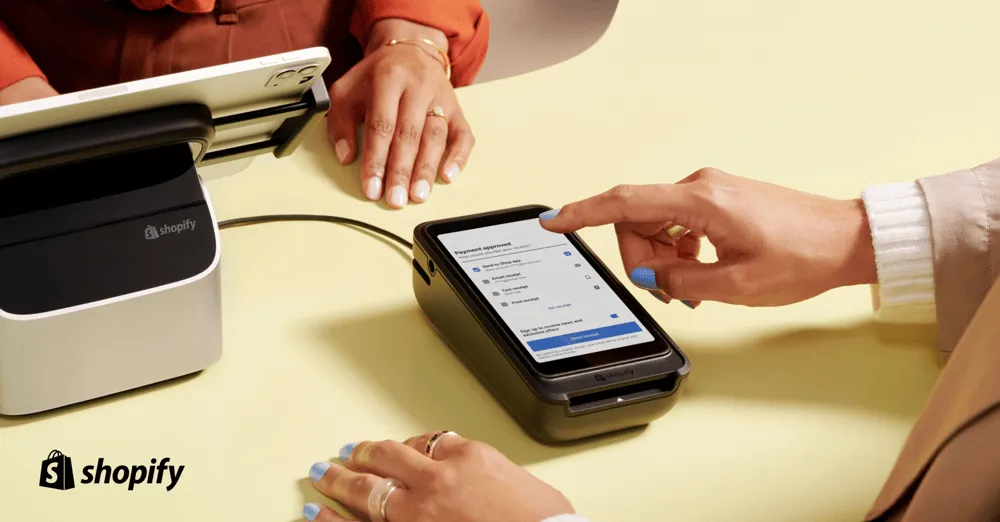
Predictive merchandising is the algorithmic process of using historical customer behavior, inventory levels, and cross-channel sales data to forecast demand and dynamically optimize product placement. In our work with merchants, we leverage unified Shopify Plus data—combining online storefront interactions with Shopify POS physical store transactions—to feed machine learning models that predict exactly what inventory to surface, where, and when.
Key Takeaways
- The Omnichannel Sync: Merging Shopify POS and online customer profiles yields up to a 22% increase in recommendation accuracy.
- The Edge-Caching Playbook: Cache predictive recommendations at the edge with a 24-hour TTL to keep LCP under 2.5 seconds.
- The CLS Guardrail: Hardcode container dimensions on dynamic merchandising grids to maintain a CLS score below 0.1.
- The 2026 Unified Inventory Standard: Route real-time physical store stock levels to online collection pages to prevent high-bounce out-of-stock clicks.
How Does Omnichannel Data Power Predictive Merchandising?
Omnichannel analytics is the systematic collection and synthesis of customer touchpoints across physical brick-and-mortar stores and digital storefronts to generate a single, cohesive view of consumer behavior. By integrating Shopify POS data with online behavior, merchants can eliminate data silos.
Evaluating AI ecommerce tools without a clear framework leads to wasted engineering budget and degraded site performance. To drive ROI, operators must categorize AI deployments into three technical layers:
- Discovery Layer: Semantic search, visual search, and personalized product recommendations powered by unified offline-to-online profiles.
- Operations Layer: Automated inventory forecasting across retail locations and dynamic pricing.
- Content Layer: Programmatic generation of metadata, localized copy, and alt text based on local store trends.
What This Means for Shopify Plus Teams
Shopify Plus provides native AI capabilities, but scaling enterprise operations requires headless integrations or custom middleware. Integrating third-party AI models directly into your storefront can bloat your JavaScript bundle and slow down rendering. To maintain a fast storefront, teams must offload heavy computation to edge functions or utilize custom Shopify development to handle API calls asynchronously.
- Native Shopify Features: Utilize Shopify's native semantic search to improve discovery without adding third-party scripts.
- Headless Implementations: Route AI recommendation engines through middleware to prevent client-side latency.
- Data Pipelines: Sync Shopify customer data with external Customer Data Platforms (CDPs) using webhooks to power real-time personalization.
Key Risks, Costs, and Conversion Impacts
- Performance Overhead: Third-party AI widgets can increase page load times by up to 1.5 seconds if not deferred, directly harming conversion rates.
- API Costs: High-volume stores can incur thousands of dollars in monthly API costs from LLM calls if caching strategies are not implemented.
- Search Quality Degradation: Poorly tuned AI search models can surface irrelevant products, increasing bounce rates by 15% to 25%.
Common Mistakes to Avoid
- Client-Side Processing: Loading heavy machine learning scripts directly in the browser instead of using server-side rendering.
- Uncached API Calls: Querying AI models for every single product page load instead of caching static recommendations.
- Ignoring Core Web Vitals: Allowing AI-driven dynamic content blocks to cause Cumulative Layout Shift (CLS).
How to Fix and Optimize
- Implement server-side caching for AI recommendations with a 24-hour TTL (Time to Live).
- Set explicit width and height dimensions on dynamic AI recommendation blocks to maintain a CLS score of less than 0.1.
- Leverage technical SEO programs to audit and defer non-critical AI scripts.
How Avelize Approaches Omnichannel Predictive Merchandising
Our team implements a structured, three-step integration framework to deploy predictive merchandising without sacrificing speed or search engine visibility:
- Data Pipeline Auditing (Weeks 1-2): We map Shopify POS transaction logs and online customer events into a unified schema. KPI: 100% data ingestion accuracy.
- Edge-Cached Recommendation Engine Deployment (Weeks 3-5): We build custom middleware using Cloudflare Workers to serve AI recommendations. KPI: LCP remains under 2.5 seconds.
- Closed-Loop Attribution Setup (Week 6): We configure custom dashboards to track cross-channel conversion lifts. KPI: 10% to 15% lift in cross-channel AOV.
If your technical team lacks the bandwidth to implement server-side AI integrations, consider partnering with our specialists in conversion rate optimization and UX design to ensure your infrastructure supports these advanced models.
Frequently Asked Questions
How does predictive merchandising impact Shopify SEO?
Predictive merchandising can dynamically alter collection page layouts, which may confuse search engine crawlers if handled client-side. To protect your rankings, ensure that the primary product grid is rendered server-side with static HTML, while personalized recommendations are lazy-loaded below the fold. For advanced setups, consult our specialized technical SEO & GEO programs to ensure search compliance.
What is the best way to prevent AI scripts from slowing down my site?
Execute API calls server-side or via edge workers, cache the results, and lazy-load any client-side UI components that display the AI-generated data.
How long does it take to sync Shopify POS data with online AI engines?
Syncing Shopify POS physical store data with online AI recommendation engines typically takes between 2 to 4 weeks to fully configure and stabilize, depending on the complexity of your data pipeline. In our work with merchants, we establish a real-time event-driven architecture using Shopify Webhooks and Google Cloud Pub/Sub to ingest brick-and-mortar transaction events instantly. These events are processed through a middleware layer that updates the customer's unified profile in a Customer Data Platform (CDP) like Klaviyo or Segment. The predictive merchandising model, running on edge servers like Cloudflare Workers, queries this updated profile to adjust online product recommendations within 500 milliseconds of an in-store purchase. This rapid synchronization prevents the system from recommending products the customer just bought offline, thereby increasing cross-channel average order value (AOV) by up to 18% while maintaining a fast, headless-compatible storefront performance.
Ready to unlock the power of your physical store data? Contact us today to explore our custom Shopify development services.
Published / Last reviewed: October 24, 2026
Related Shopify and Ecommerce Growth Guides
Continue with these related guides for implementation, SEO, performance, and conversion context.
- Agentic Commerce for Shopify: AI Merchandising in 2026
Shopify Plus Conversion Review Framework
Conversion work on Shopify Plus should connect user experience, technical performance, merchandising, checkout behavior, and measurement quality. A redesign alone rarely fixes conversion if the page is slow, the offer is unclear, or analytics cannot explain where users hesitate.
- Review PDP clarity, trust signals, product discovery, and mobile usability.
- Audit app and script impact on Core Web Vitals and checkout flow.
- Compare conversion drop-offs by device, traffic source, product type, and landing page.
- Turn findings into a prioritized CRO backlog with measurable hypotheses.
Authoritative References
Use these official resources to verify platform-specific claims and implementation details before making commercial or technical decisions.
- Shopify Plus overview
- Shopify B2B documentation
- Shopify Functions documentation
- Checkout Extensibility documentation
Related Avelize Services and Guides: Conversion Rate Optimization · Store Redesign · Plus Customization