
Programmatic SEO for Shopify Plus: Scaling Organic Traffic
By:
Review how SEO Services Shopify Store shape Shopify Plus SEO, CRO, migration risk, and revenue so ecommerce teams can prioritize safer fixes.
Programmatic SEO for ecommerce is the automated generation of thousands of search-optimized landing pages targeting long-tail, high-intent transactional queries. By structuring product data, categories, and attributes into dynamic templates, brands can scale organic search visibility, capture niche traffic, and lower customer acquisition costs without manual page creation. In our work with merchants, we deploy this strategy to bypass platform constraints and capture high-intent search volume at scale in 2026.
Key Takeaways
- The Metaobject-to-Page Routing Pattern: Utilize Shopify Metaobjects as custom database tables to store structured programmatic variables without cluttering core product schemas.
- The 100-Link Hub-and-Spoke Model: Prevent crawl budget waste by grouping programmatic pages into dynamic HTML sitemaps with 100 to 200 links per hub.
- Liquid Loop Optimization: Avoid nested loops and limit collection grids to 24 products to maintain a low Time to First Byte (TTFB).
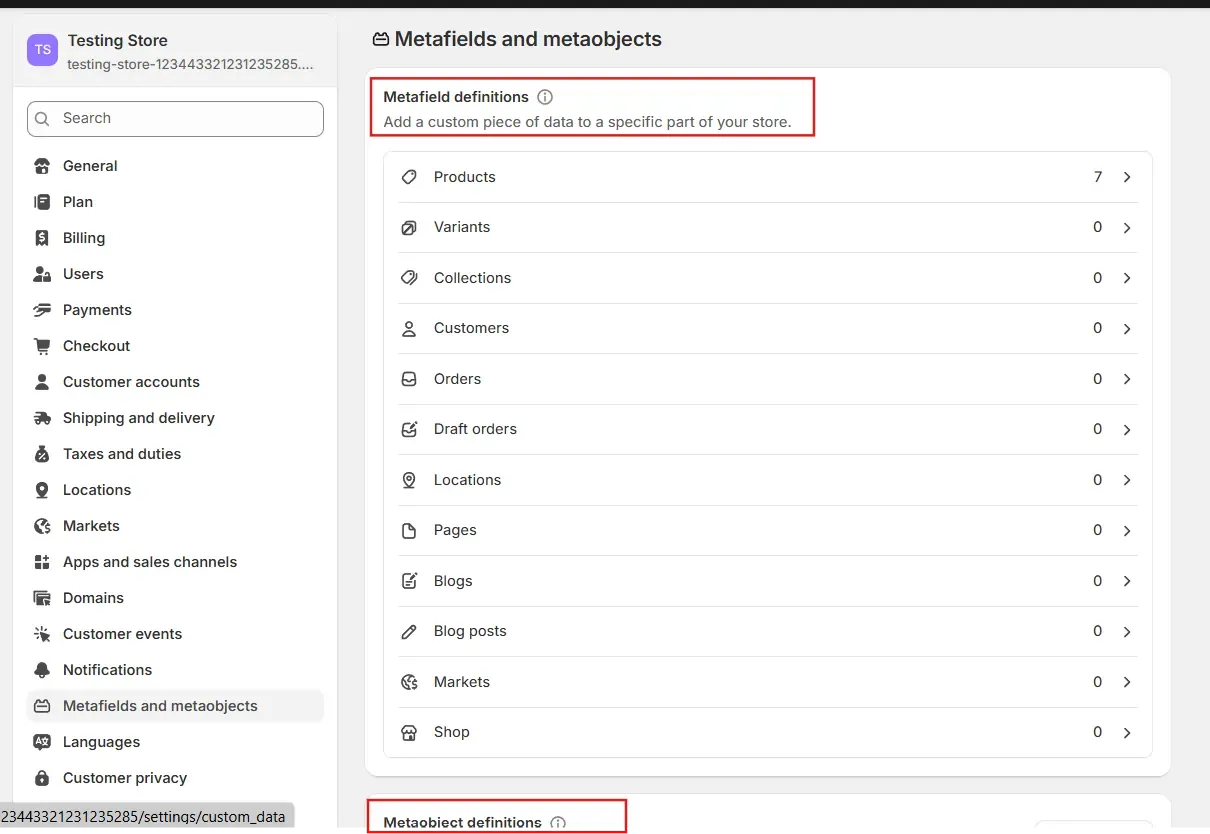
Mapping Your Programmatic Database: Structuring Shopify Metafields and Custom Data Objects for Scale
To scale programmatic SEO on Shopify Plus, you must move beyond standard product and collection schemas. Shopify Metaobjects act as custom database tables, allowing you to define structured datasets for your landing pages.
By leveraging Metaobjects, you can store structured programmatic variables without cluttering your core product and collection data. Our team at Avelize designs custom data schemas through our SEO & Data services to ensure seamless data mapping at scale.
Define a "Programmatic Landing Page" Metaobject with these core fields:
- Target Keyword: The primary long-tail search query.
- Dynamic Page Title & Meta Description: Templates with variable placeholders.
- H1 & H2 Headers: Structured tags populated by database attributes.
- Product Reference List: Dynamically associated product IDs to render on the page.
- Custom Copy Blocks: Unique text variables to prevent thin content penalties.
Bypassing Shopify's URL Constraints: Setting Up Custom Page Templates and Dynamic Routing
Shopify Plus enforces rigid subfolder paths like /pages/ or /collections/. To deploy programmatic pages, you must work within these structures or implement a headless architecture.
For native Shopify setups, use custom page templates combined with dynamic Liquid logic to render Metaobject data based on URL handles.
Alternatively, deploy custom routing through our custom Shopify development services to map clean, custom URLs using a headless frontend like Hydrogen or Next.js.
If staying within monolithic Shopify, follow this dynamic routing setup:
- Create a single custom page template named
page.programmatic.json. - Configure the template to read the current page handle and pull the matching Metaobject entry.
- Map the Metaobject fields to your theme's HTML blocks dynamically.
- Use Shopify Flow or the Admin API to auto-generate new pages under
/pages/[handle]whenever a new Metaobject record is created.
Automating Scalable Content Generation: Rules for Dynamic Copy, H1s, and Meta Tags Without Thin Content Penalties
Google's helpful content system penalizes massive programmatic rollouts that offer zero unique value. To rank, your automated pages must display highly relevant, structured content that mimics hand-crafted landing pages.
Feature Static Landing Pages Programmatic Landing Pages (2026) Creation Method Manual page creation via admin dashboard Automated generation via Metaobjects & APIs Scalability Low (limited by manual resources) High (scales to thousands of pages instantly) Data Management Hardcoded content per page Dynamic variables mapped from structured databasesWhat to Avoid (Common Mistakes)
- Simple Search-and-Replace Templates: Generating 10,000 pages where only the city or product name changes.
- Empty Product Grids: Publishing pages that return zero active products.
- Duplicate Meta Descriptions: Using identical meta tags across hundreds of variations.
How to Implement Dynamic Copy Rules
To generate unique, high-quality content at scale, implement these programmatic copy rules in your Liquid templates:
- Dynamic Inventory Counters: Insert live metrics like "Showing 14 matching items starting at $29.99".
- Spintax-Based Introductions: Use conditional Liquid blocks to vary the sentence structure of your introductory copy.
- Contextual FAQs: Pull dynamic FAQ Metaobjects based on the page's parent category.
- Automated Schema Markup: Inject dynamic
ProductCollectionorItemPagestructured data to improve rich snippet visibility.
Technical SEO Guardrails: Managing Crawl Budget, Internal Linking, and XML Sitemaps on Shopify Plus
Search engines will not index thousands of new pages if they cannot discover them or if they waste crawl budget on low-value URLs. You must establish strict technical guardrails to guide search crawlers efficiently.
Our specialized Shopify SEO services help brands implement these exact crawl control mechanisms.
Implement these technical controls to protect your crawl budget:
- Dynamic HTML Sitemaps: Create hub pages that link to sub-categories in groups of 100 to 200 links to distribute PageRank.
- Robots.txt Customization: Disallow search filters, sorting parameters, and internal search result pages to prevent duplicate path crawling.
- Custom XML Sitemaps: Bypass Shopify's default sitemap limitations by hosting a custom, compressed XML sitemap on a subfolder using a proxy or custom app.
- Self-Referential Canonicals: Ensure every programmatic page points to its exact clean URL, preventing indexing of tracking parameters.
Performance Optimization: Preventing Page Speed Bloat and Liquid Loop Latency Across 10,000+ Programmatic Pages
Querying multiple Metaobjects and looping through product arrays on every page request can severely degrade your Core Web Vitals. High Time to First Byte (TTFB) on Shopify Plus is often caused by unoptimized Liquid code.
Read our guide on Shopify Speed Optimization to learn more about reducing server response times.
Follow this checklist to prevent page speed bloat:
- Avoid Nested Loops: Never loop through products inside a loop of Metaobjects; fetch data directly using targeted handles instead.
- Paginate Product Grids: Limit programmatic collection grids to a maximum of 24 products per page.
- Lazy Load Off-Screen Images: Apply the
loading="lazy"attribute to all images below the fold. - Asynchronous Dynamic Elements: Load non-critical elements like reviews, recommendations, and dynamic pricing via client-side API calls.
Monitoring and Maintenance: Tracking Indexation Rates and Organic Performance via Google Search Console API
Deploying thousands of pages requires automated monitoring. Manual checks in Google Search Console are insufficient for tracking indexation trends and identifying crawl anomalies across massive URL sets.
Follow this 5-step checklist to build an automated programmatic monitoring pipeline:
- Segment URLs by Category: Create dedicated XML sitemaps for your programmatic pages and submit them individually to Google Search Console.
- Extract Indexation Status: Set up a Python script or use a middleware tool to query the Google Search Console URL Inspection API daily.
- Monitor Crawl Errors: Track the ratio of "Crawled - currently not indexed" to "Indexed" pages to detect thin content flags.
- Set Up Indexation Alerts: Configure automated Slack or email alerts if indexation drops by more than 5% week-over-week.
- Analyze Performance: Match indexation data with organic traffic metrics using Google BigQuery to measure the ROI of specific programmatic cohorts.
How Avelize Approaches Programmatic SEO
Our team engineers enterprise-grade programmatic SEO structures that balance crawl efficiency, page speed, and indexation quality. We follow a structured deployment process:
- Phase 1: Schema Architecture & Metaobject Mapping (Weeks 1-2): Designing custom data models that map cleanly to your catalog without database bloat.
- Phase 2: Dynamic Routing & Template Engineering (Weeks 3-4): Building high-performance Liquid templates or headless React components with a target TTFB under 200ms.
- Phase 3: Content Generation & Guardrail Deployment (Weeks 5-6): Implementing spintax rules, custom XML sitemaps, and automated indexation monitoring.
Our programmatic content engineering programs are tailored to your store's catalog size and market opportunity, starting at $15,000.
Frequently Asked Questions
How do you prevent duplicate content penalties with programmatic SEO on Shopify Plus?
To prevent duplicate content penalties when deploying programmatic SEO on Shopify Plus, we implement the Dynamic Variable Injection Pattern. This method ensures that every automated landing page features unique, high-value content rather than simple search-and-replace text. We achieve this by combining three core elements: dynamic inventory counters, spintax-based copy blocks, and contextual FAQ sections. For example, instead of static text, our Liquid templates render live metrics such as 'Showing 14 matching items starting at $29.99' and dynamically pull localized or category-specific FAQs from associated Metaobjects. Additionally, we inject automated schema markup, specifically ProductCollection and ItemPage structured data, to provide search crawlers with clear semantic context. By ensuring that each page contains unique product arrays, real-time inventory data, and distinct structured copy, search engines recognize the pages as highly valuable, avoiding thin content flags and maximizing indexation rates across thousands of programmatic URLs.
How long does programmatic SEO take to show results?
Typically, search engines begin crawling and indexing programmatic pages within 2 to 4 weeks of deployment. Significant organic traffic growth and keyword rankings are generally observed within 90 days, provided that crawl budget guardrails and internal linking structures are correctly configured.
Is programmatic SEO worth it for Shopify Plus stores?
Yes. For Shopify Plus stores with large product catalogs or diverse attribute sets, programmatic SEO offers an exceptionally high ROI. It allows merchants to capture long-tail search queries at scale, reducing reliance on paid acquisition channels and lowering overall customer acquisition costs.
Ready to scale your organic acquisition channel? Partner with our team to engineer a high-performance programmatic SEO program. Contact us today to explore our Technical SEO & GEO programs.
Published / Last reviewed: October 24, 2026
Authoritative References
Use these official resources to verify platform-specific claims and implementation details before making commercial or technical decisions.
- Shopify Plus overview
- Google SEO Starter Guide
- Google canonicalization guide
- Google structured data introduction
Related Avelize Services and Guides: Programmatic Seo · Shopify Seo Services · Plus Customization