
AI CRO for Shopify Collective: Partner SKU Optimization
By:
In our work with high-volume merchants, we find that optimizing partner SKUs requires a systematic approach to brand alignment. AI ecommerce CRO is the automated optimization of imported partner product pages using machine learning to dynamically rewrite descriptions, align visual assets, and inject contextual cross-sells, ensuring third-party inventory matches the host store's native user experience and conversion benchmarks. By deploying automated LLM pipelines, brands can eliminate the visual and tonal friction that typically drops partner product conversion rates.
Key Takeaways
- Implement the AI-Driven Partner-Native Alignment framework to dynamically rewrite 100% of imported supplier descriptions.
- Boost average order value (AOV) by pairing native hero products with partner SKUs using a 10% to 15% dynamic discount trigger.
- Maintain trust by filtering imported reviews through an automated sentiment analysis pipeline to strip competitor brand names.
- Target a baseline Partner PDP Conversion Rate of 2.0% and a Cross-Brand Attachment Rate of 12% to 18%.
Mapping the Shopify Collective Funnel: Why Partnered Products Suffer from Lower Conversion Rates
When you import products via Shopify Collective, the default product data matches the supplier's store. This creates immediate friction points that drop conversion rates:
- Mismatched Tone of Voice: Supplier product descriptions use different vocabulary, formatting, and feature highlights than your native catalog.
- Inconsistent Visual Assets: Partner imagery often uses different lighting, backgrounds, and aspect ratios, signaling a disjointed marketplace experience to the buyer.
- Broken Pricing and Shipping Logic: Third-party items frequently carry different shipping rates or delivery timelines, causing cart abandonment when revealed at checkout.
To fix these friction points, operators must implement conversion-focused design and UX strategies that treat partner SKUs with the same visual hierarchy and layout rules as native, high-margin inventory. Through our Conversion Rate Optimization (CRO) retainers, we systematically eliminate these visual discrepancies to stabilize the purchasing funnel.
Metric / Feature Native SKUs Standard Collective SKUs AI-Optimized Collective SKUs Conversion Rate Baseline (e.g., 2.5% - 3.5%) Typically 40% lower than baseline Matches or exceeds native baseline Description Tone 100% on-brand Supplier-default (disjointed) Dynamically rewritten via LLM Bundling Capability Manual / Static None (siloed) Automated via semantic AI rulesDeploying AI Ecommerce CRO: Setting Up Real-Time Contextual Personalization for Imported SKUs
Standard Shopify Collective imports do not automatically adapt to your site's personalization rules. You must configure real-time AI tools to rewrite and restructure product detail pages (PDPs) dynamically in 2026.
How to Fix: Step-by-Step Implementation
- Extract API Data: Use Shopify Flow to trigger an action whenever a new product is imported via Shopify Collective.
- Process via LLM: Route the raw product title, description, and tags to an AI middleware tool (such as OpenAI's API or a specialized Shopify AI app).
- Apply Brand Guidelines: Program the AI to rewrite the content to match your exact brand guidelines, enforcing rules like sentence length, bullet-point formatting, and banned words.
- Publish to Metafields: Write the optimized content directly back to your Shopify product metafields to ensure fast loading times.
If you lack the internal engineering resources to set up these automated API pipelines, leveraging our custom e-commerce app and integration development services ensures your AI stack integrates directly with your existing Liquid theme or headless infrastructure.
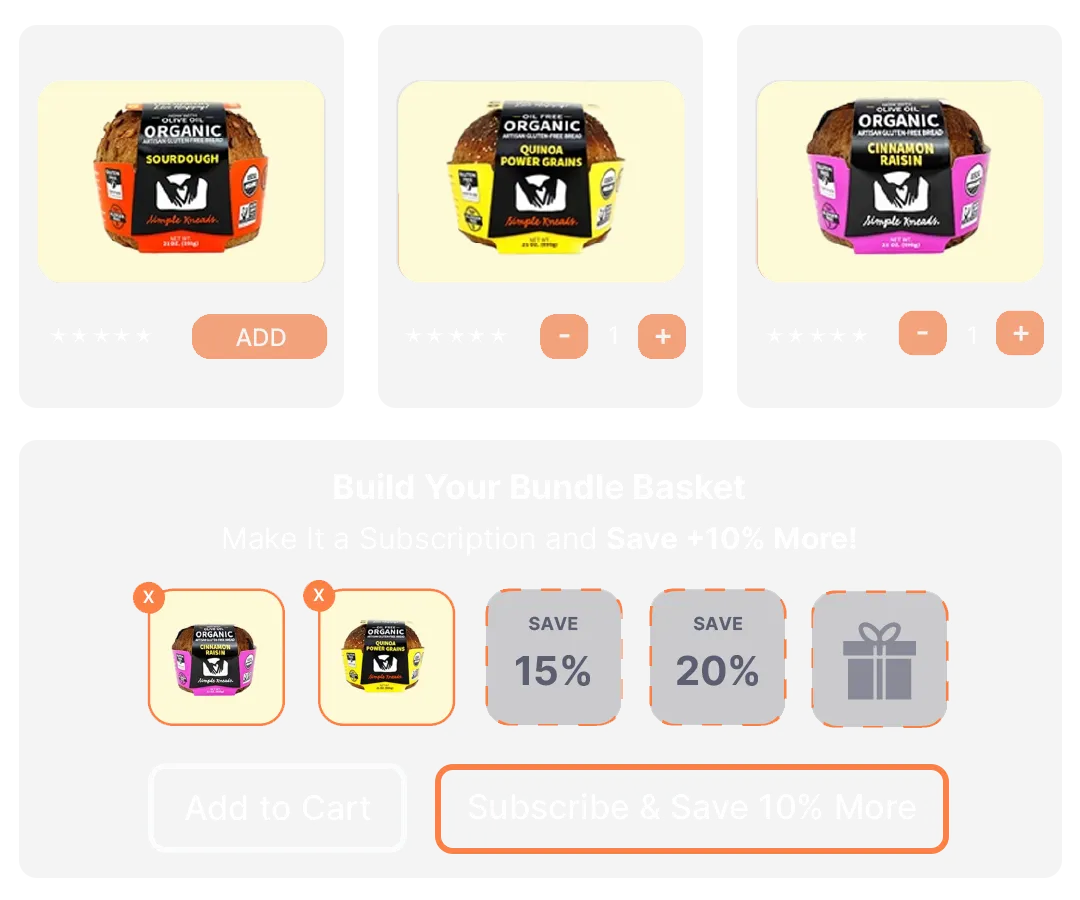
Dynamic Bundle Optimization: Using AI to Pair Native Inventory with Shopify Collective Partner Products
The fastest way to scale revenue with Shopify Collective is to bundle imported items with your native hero products. AI recommendation engines can automate this process at scale without manual merchandising using the 10% anchor bundling rule.
Implementation Checklist for AI-Driven Bundling
- Define High-Margin Anchors: Identify your top 10% highest-margin native products to act as the primary anchor items.
- Configure Association Rules: Set up your AI recommendation engine (e.g., Rebuy or Searchspring) to only recommend partner SKUs that have a high semantic affinity with the anchor product.
- Set Dynamic Discount Triggers: Program the checkout flow to offer a dynamic 10% to 15% discount when a user pairs a native anchor with an imported partner SKU.
- Automate Inventory Thresholds: Set the AI engine to hide bundle recommendations automatically if the supplier's Shopify Collective inventory drops below 5 units.
Automating Social Proof and Trust Alignment: AI-Driven Review and Badge Syncing across Partner Brands
Imported products often land on your store with zero reviews, making them look untrustworthy compared to your highly rated native products.
Common Mistakes to Avoid
- Importing Raw Partner Reviews Unmoderated: Importing reviews that mention the partner's brand name directly confuses your customers and drives them to search for the competitor's site.
- Mismatched Trust Badges: Displaying supplier-specific badges (e.g., "Eco-friendly" or "Made in USA") on partner pages when your host store uses different sustainability or quality standards.
- Ignoring Shipping Delays: Failing to clearly state that partner products ship separately from native products, leading to post-purchase customer service complaints.
How to Fix
Deploy an AI-driven review aggregator that filters imported partner reviews. Program the sentiment analysis tool to flag and strip out competitor brand names, specific pricing references, and shipping complaints before publishing them to your host PDPs. For brands looking to maximize organic visibility for these partner pages, our Technical SEO & GEO programs ensure that AI-generated descriptions are fully optimized for search engine crawlers and LLM-based search engines alike.
Measuring the Lift: Key CRO Metrics and Analytics Dashboards for Shopify Collective Performance
To prove the value of your AI ecommerce CRO program, you must isolate the performance of imported partner SKUs from your native catalog metrics.
- Partner PDP Conversion Rate: Track the specific purchase conversion rate of users who land on or view an imported product page. Target a baseline of 2.0% or higher.
- Cross-Brand Attachment Rate: Measure the percentage of orders that contain at least one native product and one Shopify Collective partner product. Target an attachment rate of 12% to 18%.
- Return on Ad Spend (ROAS) on Partner Traffic: Monitor the performance of paid traffic directed to imported SKUs. Ensure your acquisition cost does not exceed your negotiated margin split (typically 30% to 50%).
- Average Order Value (AOV) Lift: Compare the AOV of carts containing partner items against carts containing only native items to measure the bundling lift.
How Avelize Approaches Shopify Collective CRO
Our team designs and deploys custom AI middleware pipelines that automate the ingestion, transformation, and optimization of Shopify Collective catalogs.
- Phase 1: Audit & Mapping (Week 1-2): We analyze your existing partner catalog, identify high-margin anchor products, and map out custom metafield schemas.
- Phase 2: Pipeline Engineering (Week 3-5): We build the automated LLM-based translation and rewriting pipeline using Shopify Flow and custom middleware.
- Phase 3: CRO Retainer Optimization (Ongoing): Through our Conversion Rate Optimization (CRO) retainers, we continuously A/B test PDP layouts, bundle triggers, and recommendation logic to hit a target 15% attachment rate.
Ready to scale your partner catalog without sacrificing your brand's conversion benchmarks? Contact our team today to learn how our Conversion Rate Optimization (CRO) retainers can transform your Shopify Collective integration.
Published / Last reviewed: October 2026
Shopify Plus Conversion Review Framework
Conversion work on Shopify Plus should connect user experience, technical performance, merchandising, checkout behavior, and measurement quality. A redesign alone rarely fixes conversion if the page is slow, the offer is unclear, or analytics cannot explain where users hesitate.
- Review PDP clarity, trust signals, product discovery, and mobile usability.
- Audit app and script impact on Core Web Vitals and checkout flow.
- Compare conversion drop-offs by device, traffic source, product type, and landing page.
- Turn findings into a prioritized CRO backlog with measurable hypotheses.
Authoritative References
Use these official resources to verify platform-specific claims and implementation details before making commercial or technical decisions.
- Shopify Plus overview
- Shopify Functions documentation
- Checkout Extensibility documentation
- Google Search Central: Core Web Vitals
Related Avelize Services and Guides: Conversion Rate Optimization · Store Redesign