
Shopify Markets Local SEO: Enterprise Subfolder Strategy
By:
Shopify Markets Local SEO Enterprise Subfolder Strategy: a practical Shopify Plus guide to the SEO, CRO, and revenue decisions that matter for ecommerce teams.
To scale globally without fragmenting your domain authority, consolidating international storefronts into a single-domain subfolder structure is the most effective approach. By leveraging Shopify Markets, enterprise merchants can unify their SEO equity under a single root domain while maintaining localized pricing, language, and content. In our work with merchants, transitioning from isolated regional subdomains to a unified subfolder architecture consistently resolves indexation issues and accelerates international search visibility.
Key Takeaways
- The 100% Equity Rule: Consolidating subdomains into subfolders inherits 100% of the root domain's backlink authority, bypassing the cold-start problem for new regional launches.
- The Geolocation Bypass: Never implement forced IP-based redirects; instead, use the "Active Opt-In Banner Pattern" to preserve crawler access and prevent Googlebot indexing blocks.
- The Multi-Property GSC Blueprint: Verify both the root domain and individual URL-prefix properties for each regional subfolder to isolate and debug indexing anomalies.
- Dynamic Schema Injection: Utilize Liquid's
cart.currency.iso_codeto dynamically output localized JSON-LD product schema matching the user's active market.
Mapping Shopify Markets Subfolder Architecture vs. Multi-Store Subdomains
Shopify Markets international SEO is the strategic configuration of localized subfolders, dynamic hreflang tags, and regionalized metadata within a single Shopify admin to target multiple geographic search engines without maintaining separate store instances. This architecture replaces complex multi-store subdomain setups, concentrating all backlink equity into a single root domain to maximize global organic rankings.

When migrating from a multi-store subdomain setup to a single-store subfolder model, you must evaluate how authority and configuration overhead shift:
Feature Multi-Store Subdomains Shopify Markets Subfolders Link Equity Distribution Fragmented across domains Concentrated on root domain (100% inheritance) Catalog Synchronization Manual or API-dependent Native single-catalog control Hreflang Management Complex cross-domain tags Automated native Liquid output Operational Overhead High (multiple apps/themes) Low (single codebase & admin)When migrating, you must map every legacy regional subdomain URL to its exact subfolder equivalent using 301 redirects to prevent 404 errors and organic traffic loss. For complex migrations requiring custom infrastructure, leverage expert Shopify SEO services to prevent critical structural errors and maintain search presence during the transition.
Configuring Hreflang Tags in Liquid for Multi-Regional Subfolders
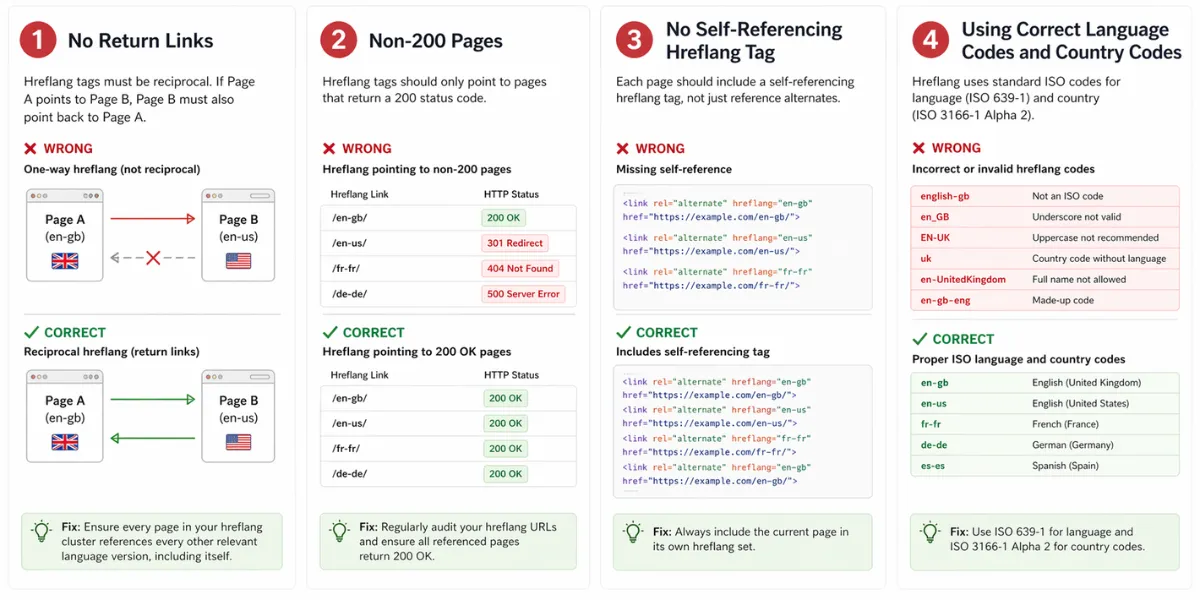
Shopify native functionality automatically injects hreflang tags into your store's header via the content_for_header Liquid object. However, custom themes, localized app integrations, and headless configurations often introduce conflicts that disrupt search engine indexing.
What to Avoid
- Hardcoded Tags: Do not manually hardcode static hreflang links in your
theme.liquidfile, as this creates duplicate tag conflicts with Shopify's native engine. - Mismatched Canonical Tags: Ensure your self-referencing canonical tags dynamically update to match the active subfolder path, avoiding cross-market canonicalization.
How to Fix
If your theme template strips out or corrupts the native hreflang output, you must verify that your theme.liquid file contains the correct header call:
{{ content_for_header }}If you run a highly customized or headless layout, you may need custom engineering to construct clean XML-compliant tag structures. Our Custom Shopify Development team can programmatically override default header injections to resolve complex hreflang mismatches.
Setting Up Regional Domain Routing and Geolocation Redirects Without SEO Penalties
Configuring automatic, forced IP-based redirects to route users to their regional subfolder is one of the most common causes of international SEO drops. Search engine crawlers (such as Googlebot, which primarily crawls from US-based IP addresses) will be blocked from accessing and indexing your non-US regional subfolders.
- Disable Forced Redirects: Turn off automatic IP-based redirects within your Shopify Markets preferences and third-party geolocation apps.
- Implement Opt-In Banners: Use non-intrusive, crawlable UI banners (such as Shopify's native Geolocation selectors) that suggest the correct regional store to users without forcing a redirect.
- Ensure Clean Crawler Access: Allow search engine user-agents to access all localized subfolder paths directly, ensuring crawlability of every regional product variant.
Localizing Metadata, Schema Markup, and Currency Pricing per Market in 2026
Consolidating your stores under a single domain does not mean using one-size-fits-all content. To rank in regional search engine results pages (SERPs), your metadata, structured data, and pricing must adapt to the target market.
Implementation Checklist
- Translate Meta Titles and Descriptions: Use Shopify's Translate & Adapt app or an enterprise translation management system (TMS) to localize metadata for every active subfolder.
- Localize Product Schema: Ensure your JSON-LD schema dynamically pulls the correct currency and price based on the active market using the
cart.currency.iso_codeobject. - Implement Multi-Currency Price Sheets: Set explicit regional pricing rules instead of relying solely on automated dynamic FX conversion, which can cause layout shifts and pricing discrepancies.
- Update Local Business Schema: If you have regional brick-and-mortar stores, update localized pages with dedicated schema matching the specific country addresses.
Debugging Multi-Regional XML Sitemaps and Search Console Property Verification
Shopify automatically generates localized sitemaps for each active market subfolder, but they must be verified correctly in Google Search Console (GSC) to ensure proper indexing.
Common Mistakes
- Single Property Verification: Verifying only the root domain property in GSC without setting up URL-prefix properties for each subfolder.
- Sitemap Submission Failures: Failing to audit sitemap indexes for subfolder inclusion after launching a new market.
How to Fix
- Step 1: Verify your main domain as a Domain Property in GSC to capture aggregate performance data.
- Step 2: Create individual URL-Prefix Properties for each subfolder (e.g.,
https://example.com/en-ca/andhttps://example.com/fr-fr/). This isolates regional search performance and indexing issues. - Step 3: Submit the market-specific sitemap index (found at
example.com/sitemap.xmlwhich nests subfolder sitemaps) directly to each URL-prefix property. - Step 4: Use the GSC URL Inspection tool to verify that Google recognizes the canonical URL and associated hreflang links for localized pages.
How Avelize Approaches This
Our team deploys a structured, three-phase subfolder consolidation program designed to eliminate crawl errors and maximize global organic visibility:
- Phase 1: Pre-Migration Audit & Mapping (Weeks 1-2): We map legacy URLs, audit existing link equity, and design the redirect architecture. Cost: $5,000. KPI: 100% mapping coverage.
- Phase 2: Liquid Theme & Hreflang Optimization (Weeks 3-4): We programmatically resolve theme conflicts and configure dynamic canonical tags. Cost: $7,500. KPI: Zero validation errors in GSC.
- Phase 3: Geolocation Setup & Verification (Week 5): We configure non-intrusive routing banners and verify GSC properties. Cost: $3,000. KPI: 100% indexation of regional subfolders.
Ready to scale your global store without losing search visibility? Partner with our team for a seamless Technical SEO & GEO Program tailored to your enterprise needs.
Published / Last reviewed: October 24, 2026
Search Intent Refresh Notes
This page has search demand in Google Search Console. Refresh it around the highest-impression query language, add concrete examples, clarify the decision criteria, and link to the most relevant service page or related guide.
Authoritative References
Use these official resources to verify platform-specific claims and implementation details before making commercial or technical decisions.
- Shopify Plus overview
- Google SEO Starter Guide
- Google canonicalization guide
- Google structured data introduction
Related Shopify and Ecommerce Growth Guides
Continue with these related guides for implementation, SEO, performance, and conversion context.
- Hiring a Shopify Plus Consultant: Enterprise Growth Guide
- Shopify Local SEO: Multi-Store Schema & Location Pages
- Shopify AI Merchandising: Enterprise Discovery Guide
- Power Automate vs Shopify Flow: Enterprise Ops Guide
- Custom Shopify Schema: Advanced Enterprise SEO Guide
Related Avelize Services and Guides: Services · Ecommerce Web Design Agency