
Shopify Vs Shopify Plus Guide
By:
Choosing between shopify vs shopify plus is a critical financial and operational inflection point for scaling brands. While Shopify Advanced supports growing businesses at $399/month, Shopify Plus provides enterprise-grade infrastructure starting at $2,000/month. In our work with merchants, we find the decision to upgrade is a mathematical equation: once your monthly GMV crosses $640,400 on Shopify Payments (or $188,353 on third-party gateways), the transaction fee savings alone completely offset the platform's cost.
Key Takeaways
- Transaction Fee Break-Even: Upgrading pays for itself at $640,400 monthly GMV on Shopify Payments (saving 0.25%) or $188,353 monthly GMV on external gateways (saving 0.85%).
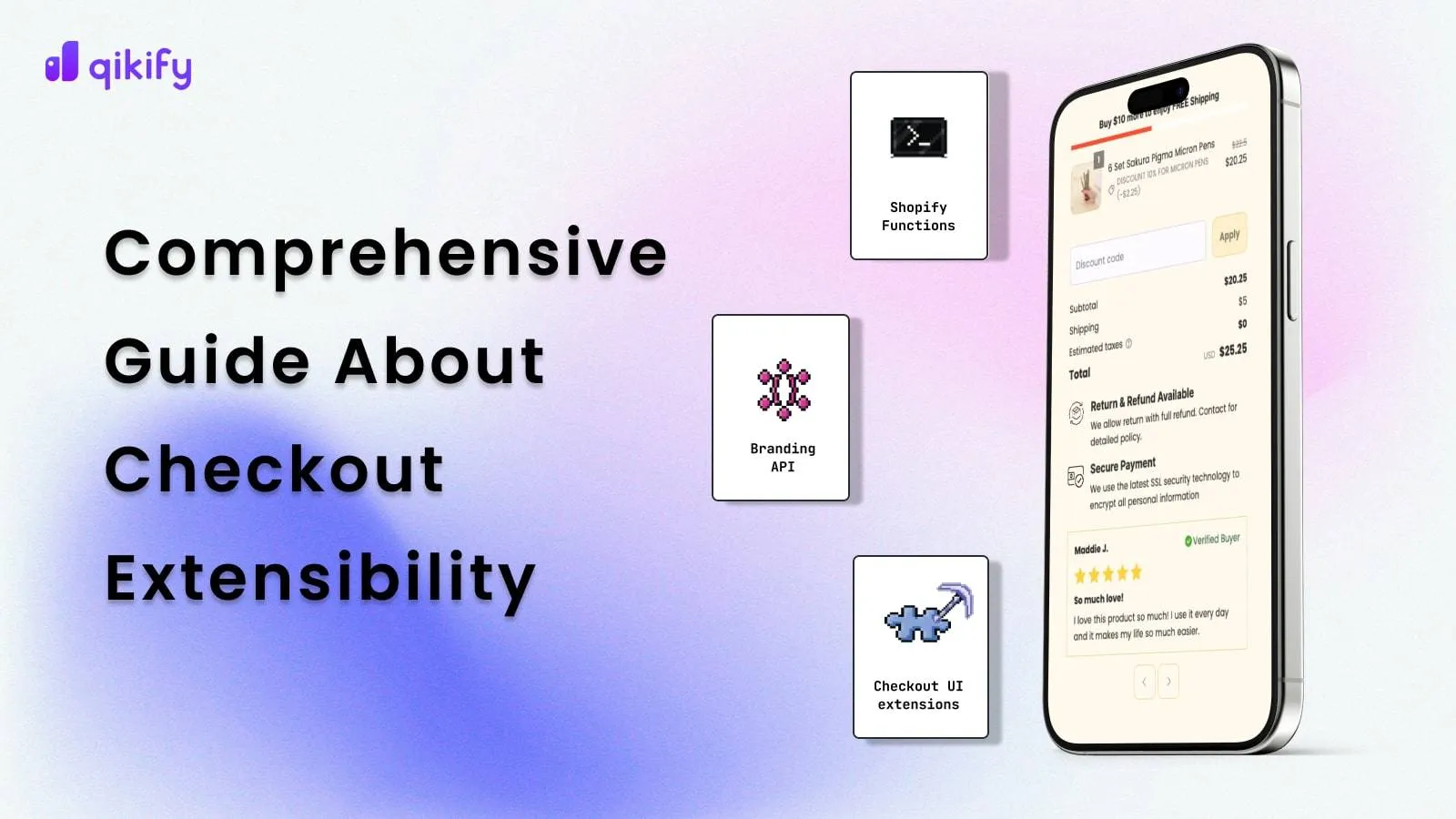
- Checkout Extensibility: Shopify Plus unlocks secure, upgrade-safe checkout customizations using UI extensions and Shopify Functions, replacing deprecated checkout.liquid scripts.
- 10x API Capacity: Plus increases GraphQL rate limits from 40 to 800 requests/second, eliminating ERP and inventory sync bottlenecks during high-traffic events.
- Multi-Store Licensing: The base Plus fee includes up to 10 expansion stores under a single contract, significantly reducing internationalization costs compared to multiple Advanced subscriptions.
Shopify vs Shopify Plus: The Core Feature and Pricing Breakdown in 2026
The primary difference between standard Shopify and Shopify Plus is that Shopify Plus offers enterprise-grade infrastructure starting at $2,000/month, featuring lower transaction fees, customizable checkouts via Checkout Extensibility, 10x higher API rate limits, and up to 10 expansion stores, whereas Shopify Advanced is capped at $399/month with standard features.
Feature / Metric Shopify Advanced Shopify Plus Base Monthly Fee $399 (billed annually) or $499 (monthly) Starts at $2,000 (3-year term) or $2,500 (1-year term) Third-Party Gateway Fee 1.0% 0.15% GraphQL API Rate Limit 40 requests/second 800 requests/second (10x increase) Checkout Customization Basic branding only Full Checkout Extensibility & Shopify Functions Included Expansion Stores None (each store requires separate plan) Up to 10 expansion stores included- Shopify Advanced is a high-tier plan costing $399/month (billed annually) or $499/month (billed monthly). Third-party transaction fees are 1.0%.
- Shopify Plus is an enterprise-grade platform starting at $2,000/month on a 3-year term (or $2,500/month on a 1-year term). Third-party transaction fees drop to 0.15%.
- Variable Fee: If monthly GMV exceeds $800,000, Shopify Plus pricing transitions to a revenue-share model of 0.25% of GMV.
When to Upgrade Shopify Plus: The Exact Revenue Break-Even Calculation
The decision of when to upgrade shopify plus is a math problem. You must calculate if your transaction fee savings offset the $1,601/month pricing gap between Advanced and Plus.
- With Shopify Payments: Credit card rates drop from 2.4% + 30¢ on Advanced to 2.15% + 30¢ on Plus. This 0.25% saving means the break-even point is $640,400 monthly GMV (approx. $7.68M annually).
- With Third-Party Gateways: The transaction fee drops from 1.0% to 0.15%. This 0.85% saving means the break-even point is $188,353 monthly GMV (approx. $2.26M annually).
If your brand operates near these volume thresholds, the upgrade pays for itself on transaction fees alone, making the enterprise features essentially free.
Checkout Extensibility vs. Standard Checkout: Customization Limits Compared
Shopify Advanced restricts checkout modifications to basic branding settings. This limitation prevents scaling brands from maximizing average order value (AOV) at the most critical stage of the funnel.
- Shopify Plus: Grants full access to Checkout Extensibility, allowing secure, upgrade-safe customizations using UI extensions and Shopify Functions.
- AOV Optimization: Plus merchants can inject custom upsells, product recommendations, and custom trust badges directly into the checkout flow.
- Custom Logic: You can write custom rules to restrict specific payment methods or shipping options based on customer tags or cart contents.
To implement high-converting checkout flows, brands leverage specialized Design & UX services to build frictionless, high-converting checkout layouts.
API Call Limits and ERP Integrations: Solving the Operations Bottleneck
High-volume brands suffer from inventory sync delays and order bottlenecks on Shopify Advanced due to strict API rate limits.
- Advanced Limits: Standard API rate limits (40 requests/second for GraphQL) often cause ERP, CRM, and IMS syncs to fail during peak traffic events like BFCM.
- Plus Limits: Shopify Plus grants 10x higher API limits (800 requests/second), ensuring seamless real-time data flow.
- Enterprise Integrations: Plus is mandatory for stable, real-time integrations with enterprise ERPs like NetSuite, SAP, or Microsoft Dynamics, and marketing suites like Klaviyo and Triple Whale.
Multi-Store Expansion and Internationalization Costs on Plus vs. Advanced
Expanding into international markets or launching secondary brands is cost-prohibitive on Shopify Advanced due to isolated subscription fees.
- Advanced Expansion: Each regional store requires a separate Shopify Advanced subscription ($399/month per store), with inventory and customer data completely siloed.
- Plus Expansion: The $2,000/month license includes up to 10 expansion stores under a single contract, sharing the same master billing.
- Localization: Plus allows localized pricing, currency, language, and inventory routing across all 10 stores without incurring extra software licensing costs.
Decision Matrix: 5 Operational Signs It Is Time to Upgrade
- Your monthly GMV consistently exceeds $190,000 on external gateways or $640,000 on Shopify Payments.
- Your ERP integration times out or drops orders during peak sales periods due to API rate limits.
- You need to implement custom checkout fields, localized payment gateways, or automated post-purchase upsells.
- You manage or plan to launch more than 3 distinct regional or brand stores.
- Your B2B wholesale channel requires a dedicated wholesale portal that syncs directly with retail inventory.
Common Mistakes to Avoid
- Premature Upgrading: Upgrading before reaching the transaction fee break-even point when your operational workflows do not actually require Plus APIs or checkout customization.
- Ignoring Contract Terms: Signing a 3-year contract to save on monthly fees without projecting long-term GMV growth past the $800,000/month variable fee threshold.
- Assuming Automatic Migration: Expecting legacy checkout scripts to work out of the box; all checkout customizations must be rebuilt using Checkout Extensibility.
How Avelize Approaches This
Our team engineers seamless migrations and platform upgrades for high-volume merchants. We execute Shopify Plus transitions through a structured, risk-mitigated process:
- Phase 1: Financial & Tech Stack Audit (Week 1): We analyze your historical GMV, payment gateway fees, and active API integrations to confirm the exact ROI of upgrading. Cost: Included in discovery. KPI: Confirmed break-even projection.
- Phase 2: Checkout & Integration Architecture (Weeks 2-4): We rebuild legacy checkout scripts into modern Checkout UI Extensions and Shopify Functions, and optimize ERP/CRM middleware to leverage the 10x API limits. KPI: Zero downtime integration sync.
- Phase 3: Migration & Launch Playbook (Weeks 5-6): We deploy expansion stores, configure localized routing, and execute a strict launch checklist. Cost: Custom project-based pricing. KPI: 100% data integrity and zero lost search visibility.
If you are ready to scale your infrastructure, explore our custom Shopify development services to plan your transition.
Frequently Asked Questions
What is the difference between Shopify and Shopify Plus?
The primary difference between standard Shopify (including Shopify Advanced) and Shopify Plus lies in enterprise scalability, transaction economics, and customization capabilities. Standard Shopify tiers are designed for growing retail brands, capping API rate limits at 40 requests per second and restricting checkout modifications to basic branding. Conversely, Shopify Plus is an enterprise platform starting at $2,000/month that drops third-party transaction fees from up to 1.0% down to 0.15%, increases GraphQL API limits tenfold to 800 requests per second, and grants full access to Checkout Extensibility for custom logic and upsells. Additionally, Shopify Plus includes up to 10 expansion stores under a single license, dedicated B2B wholesale channels, and native automation tools like Shopify Flow and Launchpad. This makes Shopify Plus the industry standard for merchants processing over $1 million in annual GMV who require robust ERP integrations and advanced checkout customization.
Is Shopify Plus worth it for small businesses?
Generally, no. Shopify Plus is rarely cost-effective for brands processing under $1 million in annual GMV. The $2,000 monthly fee represents too high an overhead unless specific operational requirements—such as complex ERP integrations, multi-store international setups, or advanced checkout customization via Checkout Extensibility—are absolutely critical to daily operations.
How long does it take to upgrade to Shopify Plus?
The technical upgrade to Shopify Plus can be completed instantly via the Shopify admin. However, migrating legacy checkout.liquid customizations to Checkout Extensibility, configuring expansion stores, and setting up enterprise ERP integrations typically takes our team between 4 to 8 weeks of development and testing.
What is the transaction fee on Shopify Plus?
If you use Shopify Payments, the credit card processing rate drops to 2.15% + 30¢ for domestic transactions. If you use a third-party payment gateway, Shopify Plus charges a 0.15% transaction fee, compared to the 1.0% fee charged on the Shopify Advanced plan.
Ready to unlock enterprise-grade performance and optimize your transaction costs? Contact our team today to discuss our Technical SEO & GEO programs or custom development solutions tailored for your Shopify Plus transition.
Published / Last reviewed: February 2026
Shopify Plus Migration Risk Checklist
A Shopify Plus migration should be planned around risk, not only around launch tasks. The most important work is deciding which URLs, templates, analytics events, redirects, integrations, and checkout flows must survive the move without damaging revenue or organic search visibility.
- Map current revenue-driving URLs and search queries before changing templates.
- Validate redirects, canonicals, structured data, and sitemap output before launch.
- Test checkout, payments, analytics, consent, and third-party scripts in a staging flow.
- Measure Core Web Vitals, conversion rate, crawl errors, and revenue after launch.
Phased Shopify Plus Implementation Plan
For many teams, a phased migration is safer than changing every business-critical system at once. Start with the pages and flows that create the highest revenue or SEO risk, then move into secondary templates, automation, and experimentation after the foundation is stable.
Authoritative References
Use these official resources to verify platform-specific claims and implementation details before making commercial or technical decisions.
Related Avelize Services and Guides: Plus Customization · Ecommerce Web Design Agency