
Magento to Shopify Plus: Enterprise Business Case & ROI
By:
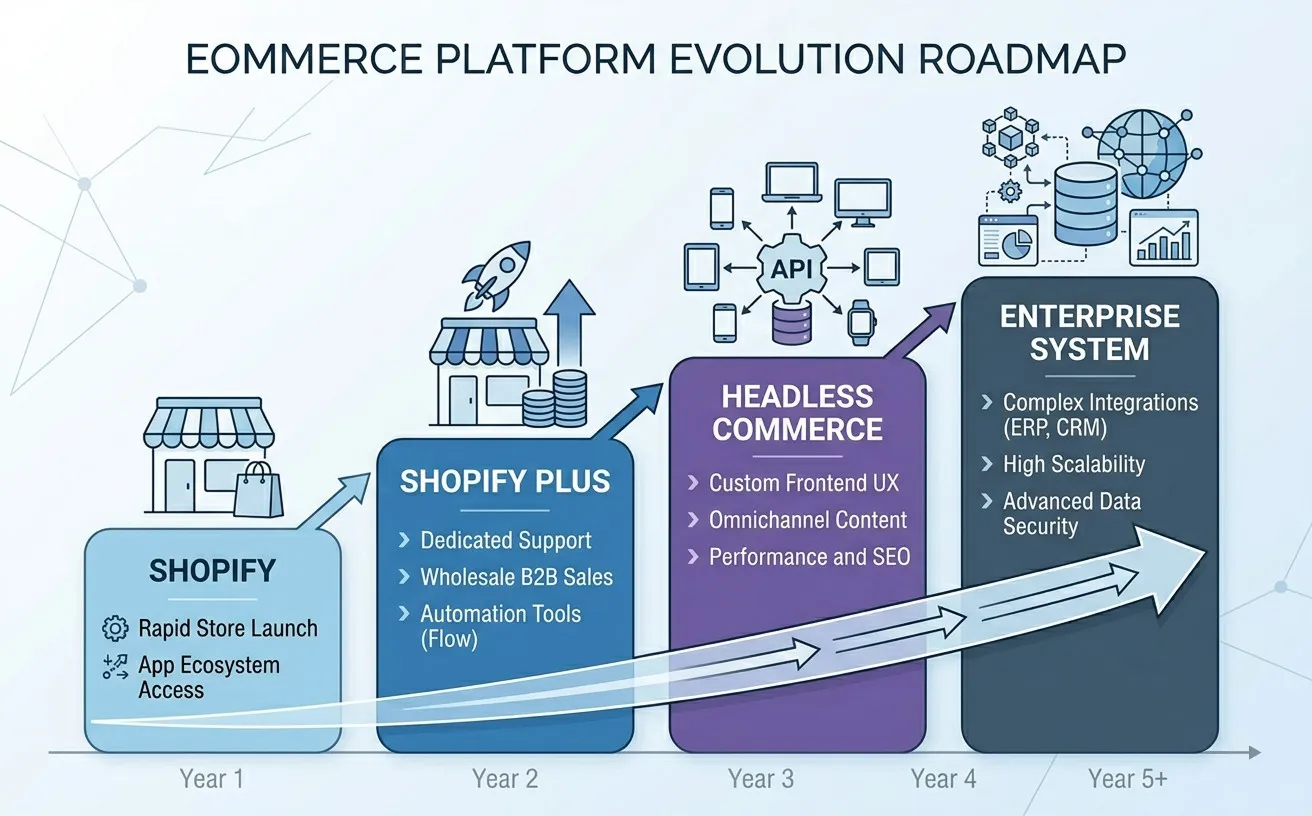
Migrating from Magento to Shopify Plus reduces three-year Total Cost of Ownership (TCO) by up to 60% while eliminating technical debt. By transitioning to a fully managed SaaS infrastructure, enterprise merchants eliminate expensive hosting management, security patching, and complex upgrade cycles. This business case outlines the exact ROI framework, migration checklist, and financial metrics required to secure C-suite approval for your platform transition.
Key Takeaways:- 60% TCO Reduction: Eliminate hosting, DevOps, and security patching costs.
- 15% to 30% CRO Boost: Improve site speed and leverage Shopify's checkout.
- The Five-Stage Database Migration Protocol: Mitigate migration risk by running a parallel beta store.
- Zero-Patch Security: Shift PCI compliance liability entirely to Shopify Plus.
The Real Cost of Magento vs. Shopify Plus (TCO Framework)
Total Cost of Ownership (TCO) is the comprehensive financial metric that aggregates platform licensing, infrastructure hosting, security compliance, and ongoing development retainers over a three-year horizon. A magento to shopify plus business case analyzes these cost centers, demonstrating how migrating from Magento to Shopify Plus reduces overhead while simultaneously increasing conversion rates through improved site speed.
To present a clear case to your financial team, we must compare the operational cost centers of both platforms directly for the 2026 fiscal year:
Cost Center Magento (Adobe Commerce) Shopify Plus (2026) Hosting & Infrastructure Dedicated cloud hosting (AWS/Azure) & active DevOps management ($50k-$150k+/yr). Fully managed, SaaS-based hosting included in licensing. Scales automatically during peak traffic. Maintenance & Security Constant security patching, PCI compliance audits, and expensive version upgrades. Automatic security, compliance, and core platform updates handled by Shopify. Development Retainers Demands highly specialized, expensive backend agencies for core maintenance. Streamlined development using in-house teams or targeted enterprise Shopify development services.Building the Business Case: The ROI Formula for the CFO
To win CFO approval, we must present hard financial metrics. In our work with merchants, we focus on these three pillars to justify the upfront migration costs:
Pillar 1: Reallocating Capital Expenditure (CapEx) to Operational Efficiency
- Calculate your current 3-year spend on Magento licensing, hosting, and agency retainers.
- Average enterprise savings typically range from $150,000 to $500,000+ annually after migrating to a SaaS model.
- Redirect these saved development hours toward revenue-generating marketing campaigns instead of platform maintenance.
Pillar 2: Conversion Rate Optimization (CRO) Uplift
- Magento speed bottlenecks directly depress conversion rates.
- Migrating to Shopify Plus improves page load speeds, often boosting conversion rates by 15% to 30%.
- Our team leverages Shopify's modern stack, including Liquid, Hydrogen for headless React/Next.js storefronts, and the GraphQL Storefront API to ensure sub-second Core Web Vitals. Integrating tools like Klaviyo and Triple Whale becomes a native configuration rather than a complex development project, ensuring your marketing stack is fully operational before BFCM.
- Project this revenue uplift using your current traffic data and our specialized conversion rate optimization and UX design services.
Pillar 3: Reduced Launch Cycles
- Shopify’s native features allow marketing teams to launch new campaigns, promotions, and landing pages in hours rather than weeks of custom Magento coding.
Step-by-Step Migration Checklist
We execute the five-stage database migration protocol to ensure a seamless data and operational transition during your migration:
- Audit Current Tech Stack: Document all Magento extensions, custom integrations, and ERP/CRM connection points.
- Cleanse Database: Export and clean customer lists, order histories, and product catalogs to avoid importing legacy database clutter.
- Map Redirects: Document every legacy Magento URL to maintain organic search equity. Utilize structured Shopify SEO services to prevent post-launch traffic drops.
- Select Replacement Apps: Map existing Magento custom features to native Shopify Plus features or high-performing ecosystem apps.
- Build and Test: Develop the new theme, configure payment gateways, and run end-to-end checkout testing.
Common Migration Mistakes to Avoid
- Replicating Bad Magento Code: Do not attempt to port legacy, over-engineered Magento processes directly to Shopify. Embrace Shopify’s native, streamlined workflows.
- Ignoring SEO During Migration: Failing to implement 301 redirects properly will destroy years of organic search ranking.
- Underestimating ERP Integration Complexity: Ensure your ERP (NetSuite, SAP, Microsoft Dynamics) integration is scoped early with experienced developers using custom Shopify development.
- Failing to Optimize Page Speed Post-Launch: Installing too many unoptimized third-party apps will slow down your new site. Keep your code clean or leverage Shopify speed optimization services to maintain peak performance.
How to Execute the Transition Without Revenue Drop
Minimize operational risk and protect your baseline revenue by executing a structured implementation phase:
Phase 1: Run a Parallel Beta Test
Launch a soft beta site on a subdomain to test integrations, checkout flows, and ERP syncing under real-world conditions without affecting your live Magento store.
Phase 2: Establish a Hard Cutover Date
Schedule the DNS switch during low-traffic hours (typically mid-week, late night) to minimize active customer disruption.
Phase 3: Monitor Analytics Closely
Track add-to-cart rates, checkout completion, and payment gateway error logs hourly post-launch to catch and resolve anomalies immediately.
How Avelize Approaches This
Our team engineers seamless, zero-downtime migrations from Magento to Shopify Plus. We manage the entire process from database cleansing to ERP integration and SEO preservation.
- Timeline: 12 to 16 weeks from discovery to launch.
- Cost: Custom scoped based on catalog size and ERP complexity.
- KPIs: 99.99% checkout uptime, 100% data preservation, and improved Core Web Vitals.
Ready to build your custom business case? Partner with our experts to plan your transition. Contact Avelize today to schedule an enterprise replatforming consultation.
Published / Last reviewed: February 2026
Authoritative References
Use these official resources to verify platform-specific claims and implementation details before making commercial or technical decisions.
Related Shopify and Ecommerce Growth Guides
Continue with these related guides for implementation, SEO, performance, and conversion context.
- Magento to Shopify Plus: Why Enterprise Brands Hire Experts
- B2B Ecommerce ROI: Shopify Plus Migration Business Case
- Shopify Flow Enterprise: Compliance & Reporting Guide
Related Avelize Services and Guides: Magento To Shopify Plus Migration Agency · Replatforming · Custom Apps